 At a glance
- Two anchors, not ten: one daytime loop + one evening ritual.
- Use the market as a meal anchor so you don’t lose time deciding.
- End with a slow walk — Riga is best when you stop rushing.
Morning: Old Town loop + viewpoint (optional)
Start with a calm Old Town loop. If you want one viewpoint, do it early before the day compresses.
Midday: Central Market tasting stop
Use the market as a ‘decision reducer’. Taste a couple of small things, then leave while you’re still enjoying it.
Afternoon: Art Nouveau details + café reset
Do a short architecture walk. Keep it details-first — a small route, slow pace, eyes up.
Evening: canal/river walk + cozy dinner
Finish with a slow walk and one good meal. Keep it close to your base so the day ends well.
The shape of one good day in Riga
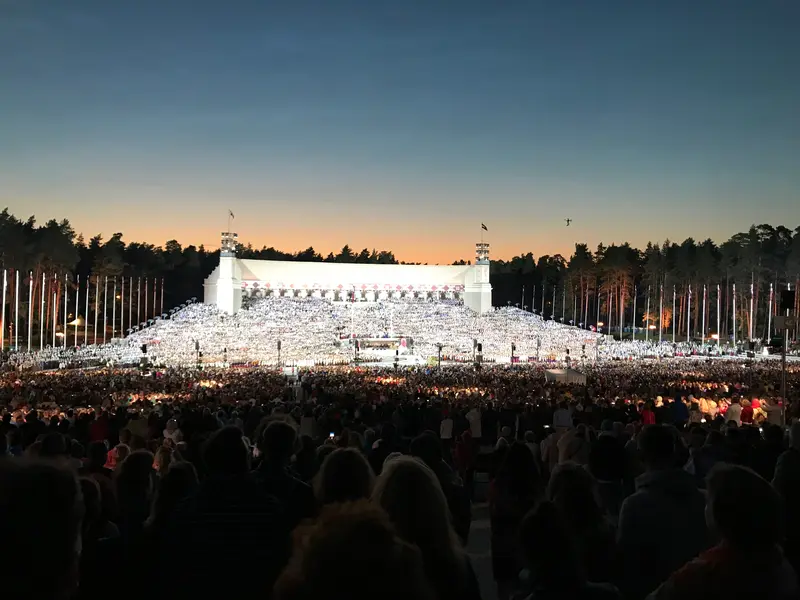
One day in Riga is plenty to feel the city, as long as you resist the urge to see everything. The historic centre is small — you can walk from the southern edge of the Old Town to the Art Nouveau streets in well under half an hour — so the limiting factor is not distance but attention. The plan below is a single continuous loop that starts in the medieval lanes, breaks at the Central Market, runs through the Art Nouveau quarter, and ends with a slow walk by the canal or river at dusk.
Treat it as a spine, not a script. If the weather turns, swap an outdoor stretch for a museum or a long café sit; if the sun is out and the light is good, stretch the evening walk and cut a midday stop. The point of a one-day plan is to give the day a clear arc so you are never standing on a corner wondering what is next.
If you arrive the night before, you will get far more from this day than if you land in the morning, because everything here runs better when you start in the calm of an early Old Town. If you only have a daytime window, simply begin at whatever the first relevant block is and let the loop carry you forward.
- One continuous loop: Old Town → market → Art Nouveau → canal/river at dusk.
- Two anchors that matter most: a morning Old Town walk and an evening waterside walk.
- Keep one stop flexible so weather or mood can reshape the middle of the day.
Morning (roughly 09:00–12:00): the Old Town on foot
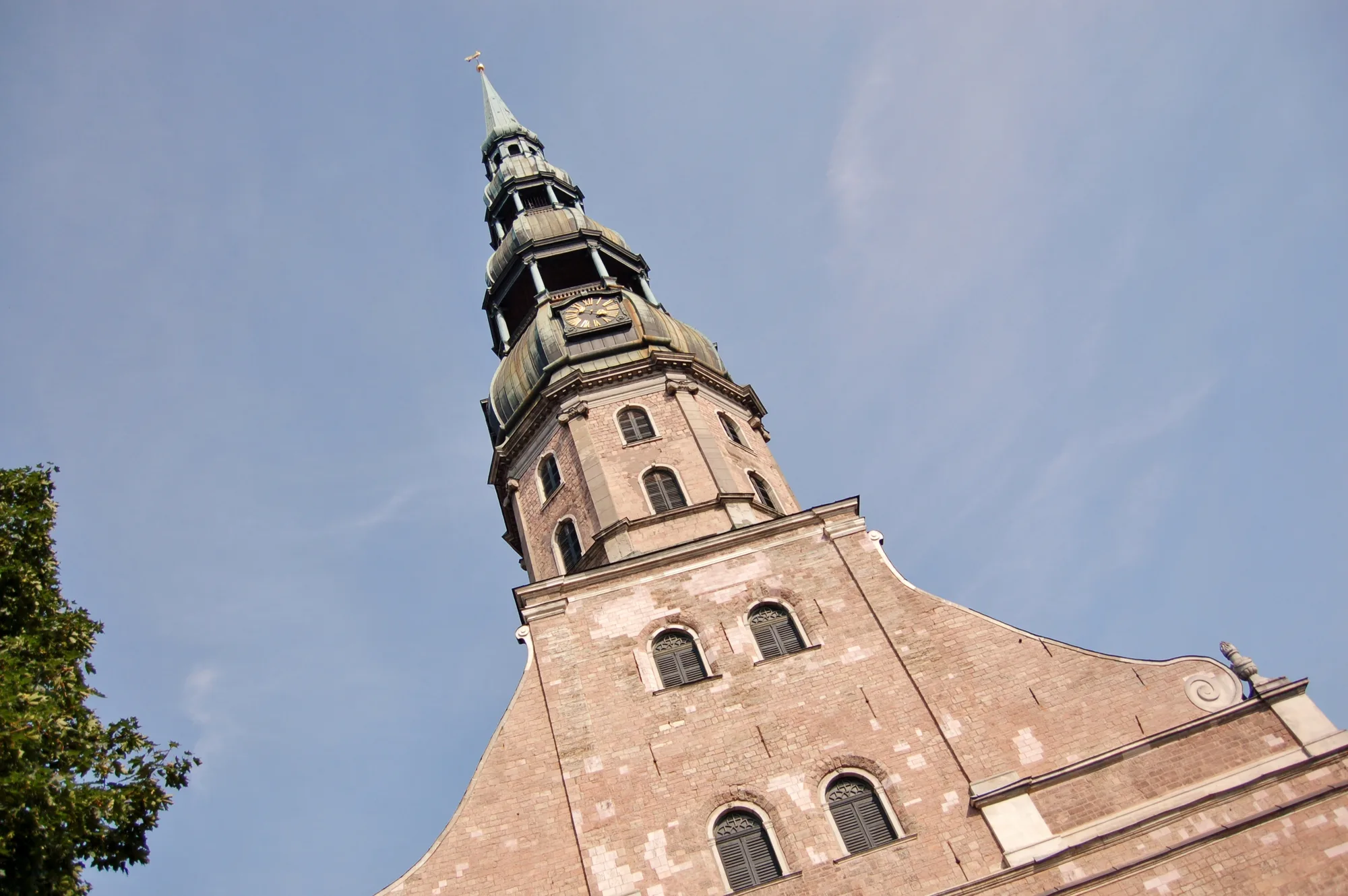
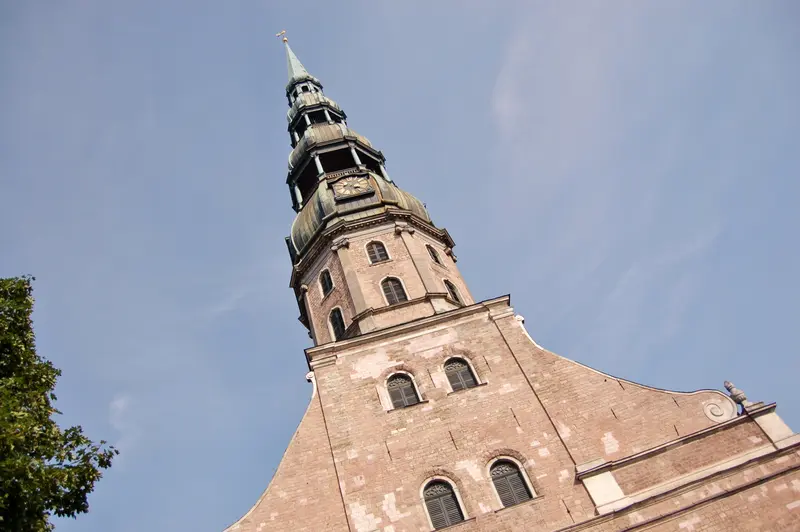
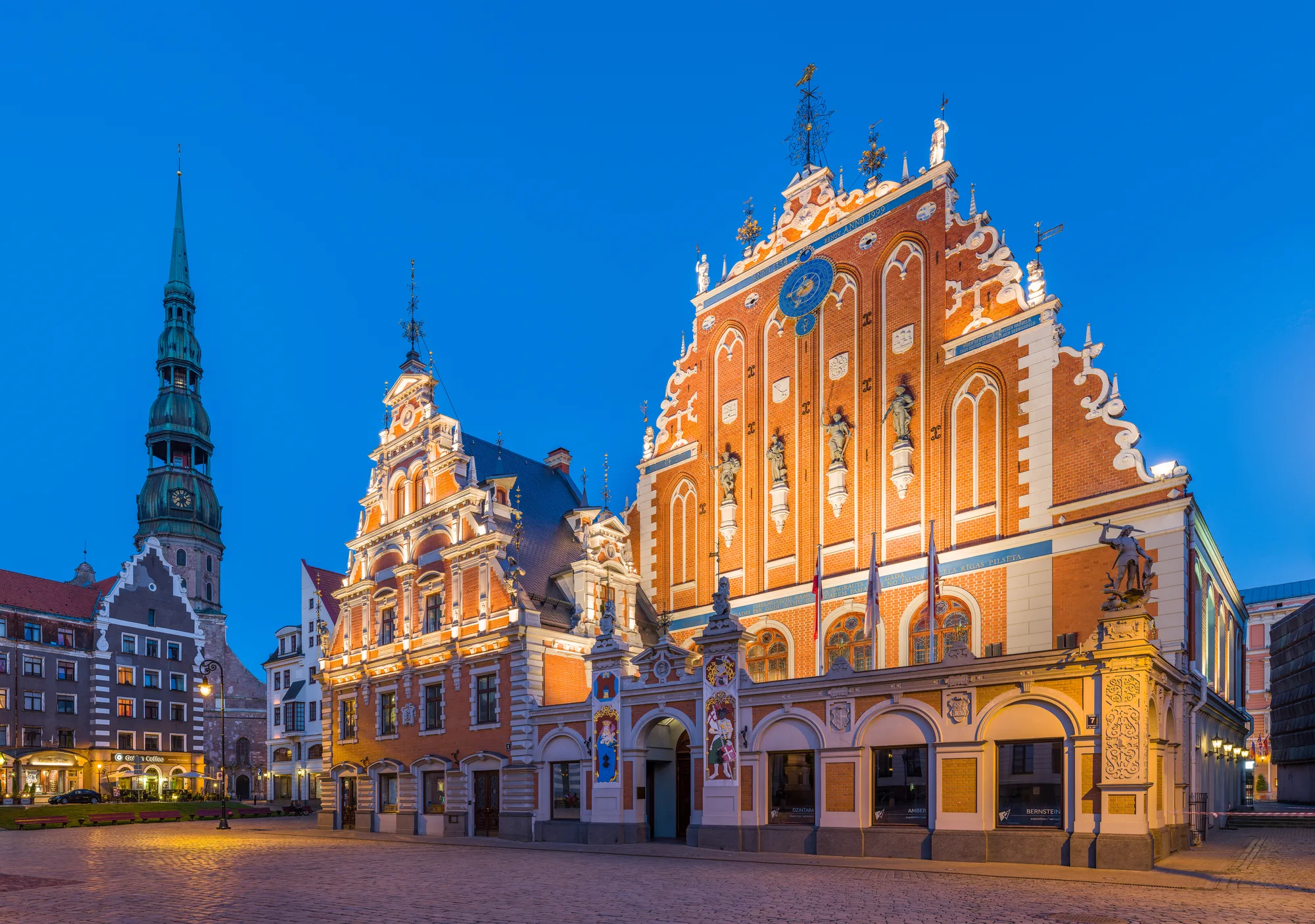
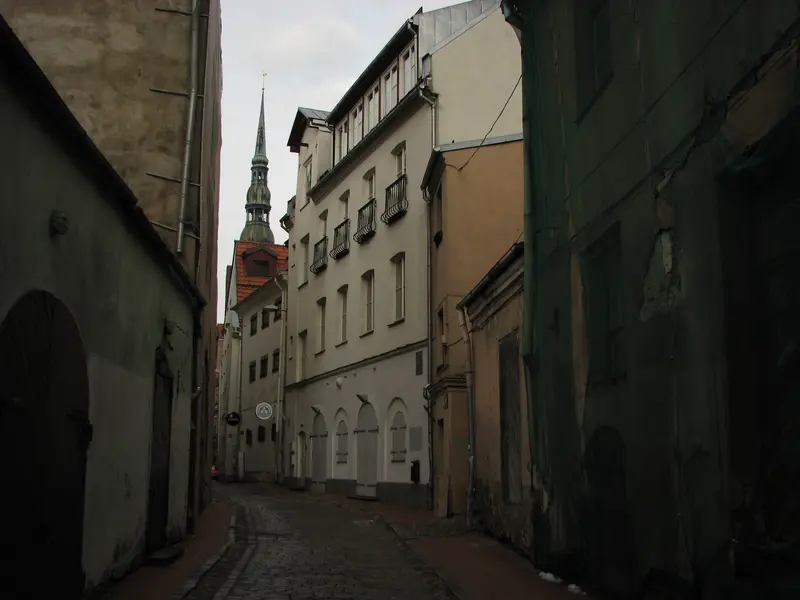
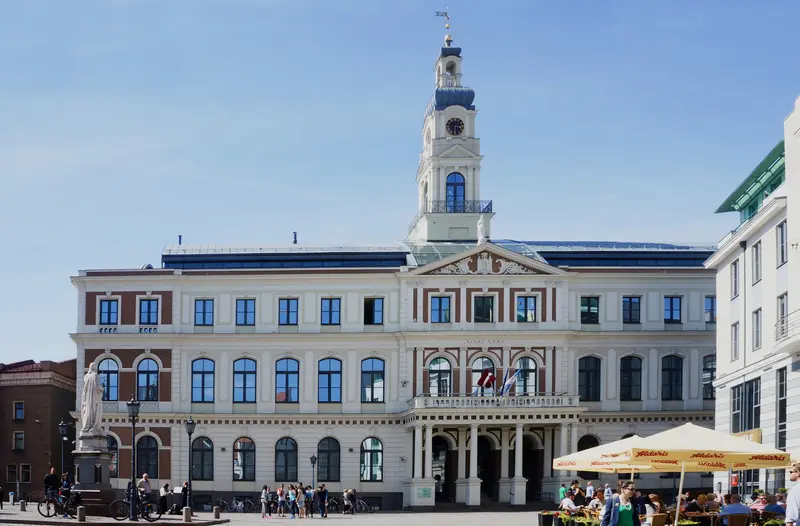
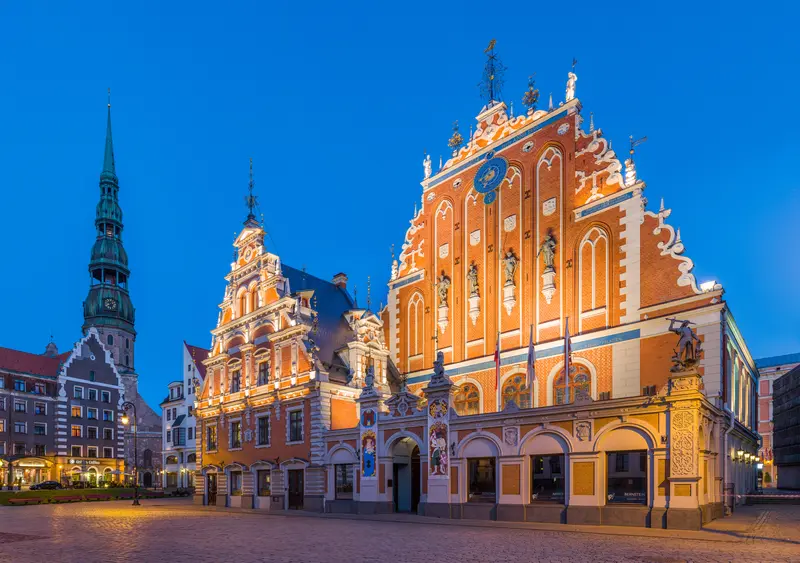
Start early while the lanes are quiet. Begin at Town Hall Square (Rātslaukums) in front of the House of the Black Heads, the lavishly rebuilt guild hall that is the most photographed façade in the city. From there, wander north through the cobbled streets toward St. Peter's Church — if you want a single viewpoint for the whole day, take its tower lift early, before tour groups arrive, for a clean look over the red rooftops and out to the river.
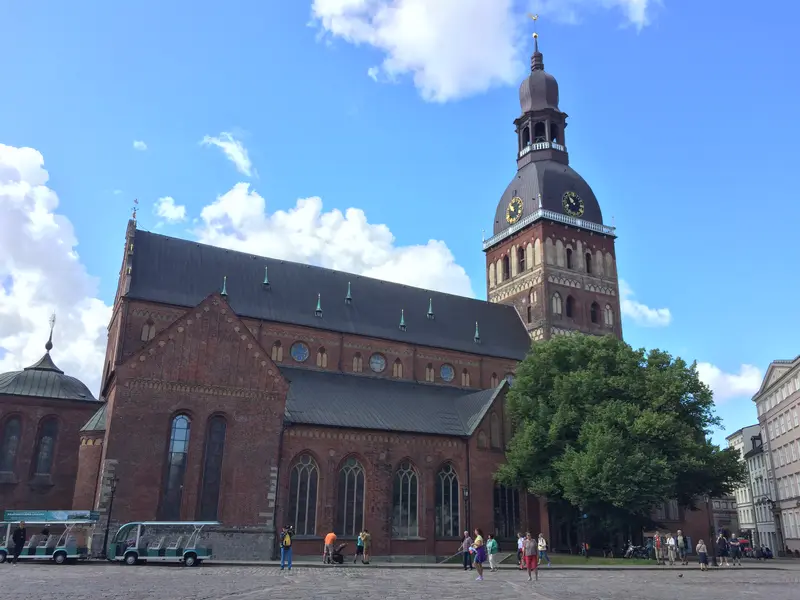
Continue to the Three Brothers on Mazā Pils iela, a row of three adjoining houses that are the oldest stone dwellings in Riga and a neat lesson in how the city's architecture changed over the centuries. A couple of minutes further is Dome Square (Doma laukums), the Old Town's largest open space, dominated by Riga Cathedral — the biggest medieval church in the Baltic states. The square itself is a fine place to slow down with a coffee and watch the city wake up.
Loop back past the Swedish Gate and the surviving stretch of the old city wall and the Powder Tower, then drift out toward the Freedom Monument, which marks the edge of the medieval town. This whole morning is short on paper but should feel unhurried — the Old Town is best taken as atmosphere first and a checklist a distant second.
- House of the Black Heads → St. Peter's Church tower (go early) → Three Brothers.
- Dome Square and Riga Cathedral for a coffee and a breather.
- Swedish Gate, the old wall, and the Powder Tower on the way out to the Freedom Monument.
Midday (roughly 12:00–14:00): Riga Central Market
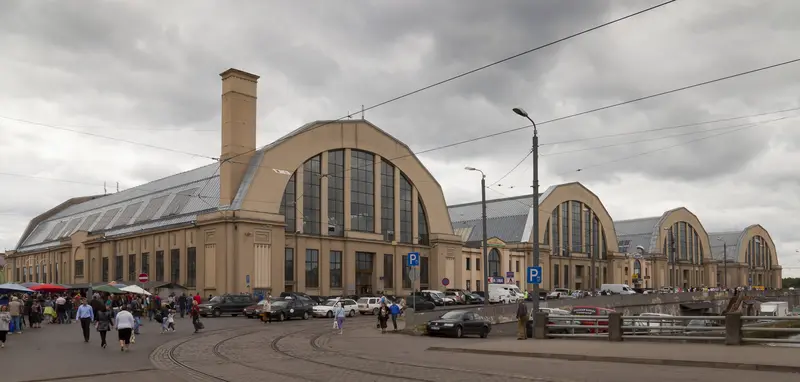
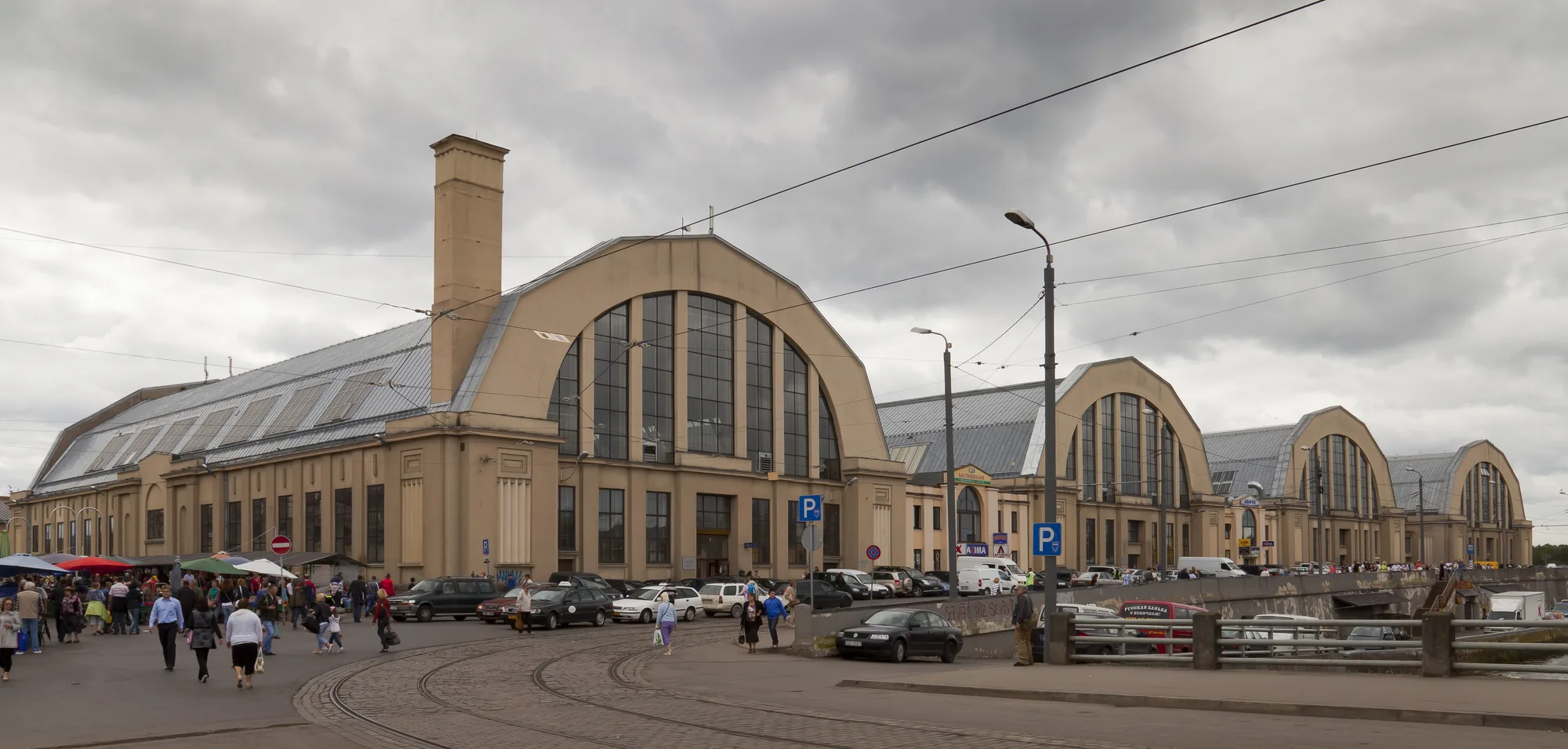
From the Freedom Monument it is a short walk south to the Central Market, housed in five enormous pavilions that began life as Zeppelin hangars and which together form one of the largest markets in Europe and the Baltics. This is your midday anchor — both for food and for shelter if the weather is poor, because the pavilions are heated and indoors.
Use the market as a decision-reducer rather than a meal to agonise over. Each pavilion has a theme — produce, meat, dairy, fish, and gastronomy — so graze a few small things: smoked fish, dark Latvian rye bread, fresh berries in season, a piece of cheese. Eat as you go or grab a sit-down plate at one of the food stalls. Keep an eye on the time, because the indoor halls tend to wind down in the late afternoon.
When you have had enough, step out toward the riverfront for a moment of open air before the afternoon — the contrast between the dense market and the wide Daugava is one of the small pleasures of the day.
- Graze across the themed pavilions rather than committing to one big meal.
- Try smoked fish, dark rye bread, local cheese, and seasonal berries.
- Indoor halls wind down later in the day — don't leave the market for last.
Afternoon (roughly 14:00–17:00): Art Nouveau and a café reset
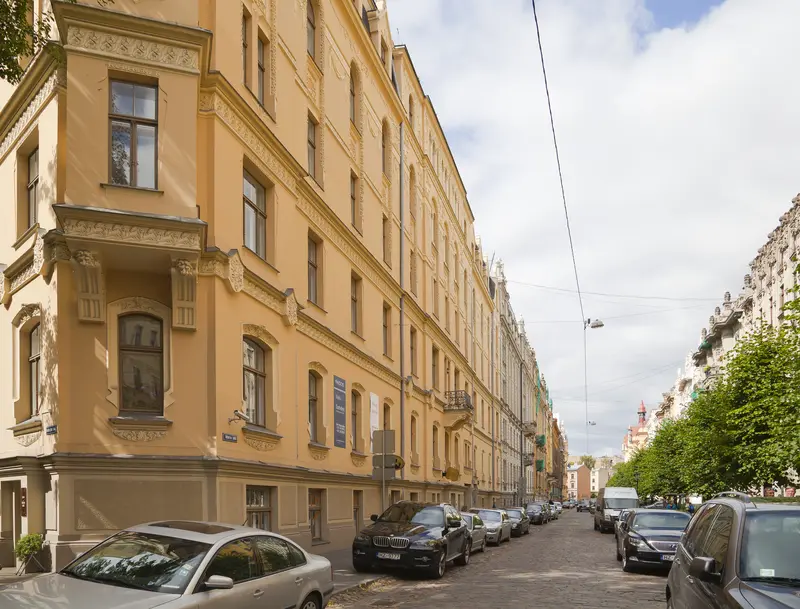
The afternoon changes the texture of the day. Walk north out of the centre to the Art Nouveau quarter, where the streets around Alberta iela and Elizabetes iela hold one of the densest concentrations of Art Nouveau architecture anywhere — a major reason the city's centre is UNESCO-listed. This is a details-first walk: slow down, look up, and notice the carved faces, peacocks, masks, and sinuous ironwork on the apartment façades.
Alberta iela alone repays a careful stroll, and several of its buildings were designed by Mikhail Eisenstein. If you want context, the Riga Art Nouveau Museum on the same street recreates a period apartment and is a good rainy-afternoon option. Don't try to cover every street; one or two blocks taken slowly beat a sprint through ten.
Anchor the afternoon with a proper café stop — sit down, warm up, and let your feet recover. This is the single rule that most improves a one-day plan: one real café break, not a coffee on the move. From here you are well placed to drift back toward the canal park as the light starts to soften.
- Walk Alberta iela and Elizabetes iela slowly — this is an eyes-up, details walk.
- Optional: the Riga Art Nouveau Museum for a period apartment and context.
- One sit-down café break — the rule that quietly makes the whole day better.
Evening (roughly 17:00 onward): canal park, river, and dinner
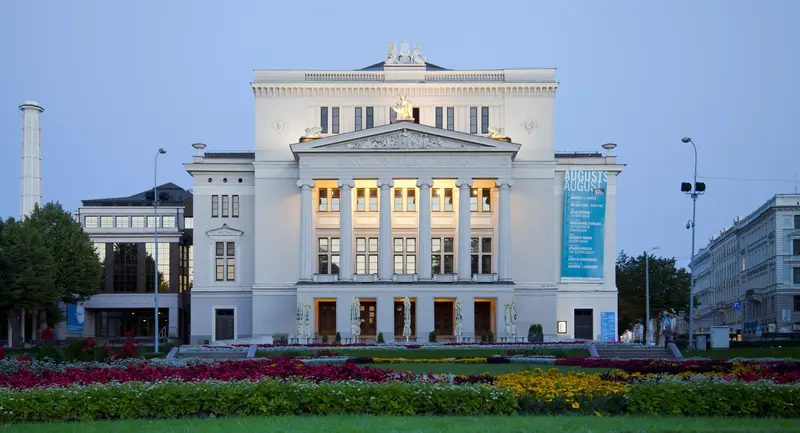
End the day on water. From the Art Nouveau streets, walk back toward the canal park (Pilsētas kanāls) and follow the green ribbon as it winds past Bastejkalns hill, the Freedom Monument, and the Latvian National Opera. In summer this is best after dinner, when the northern light lingers; in winter it works earlier, before the early dark. The canal can also be seen from the small sightseeing boats that run along it in the warmer months.
For dinner, keep it close to your base so the day ends gently rather than with a long trek. The Old Town and the streets just east of it have plenty of options, from hearty Latvian cooking to lighter modern places; choose one good meal rather than chasing a 'best' restaurant across town. If you have any energy left, finish with a short loop back through the Old Town squares, which take on a different, quieter character once the day-trippers have gone.
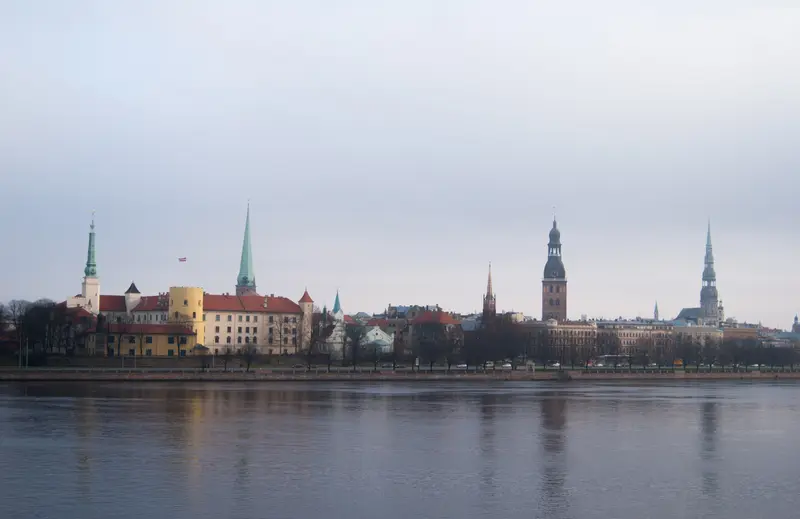
If you are visiting in the long days of summer, the riverfront along the Daugava is the strongest finish of all — wide sky, the spires of the Old Town behind you, and light that holds far later than you expect this far north.
- Follow the canal park past Bastejkalns, the Freedom Monument, and the Opera.
- Summer: walk after dinner for the long northern light; winter: go before the early dark.
- Pick one good dinner near your base — end the day calm, not rushed.
One-day Riga FAQ
Is one day enough for Riga? It is enough to enjoy the city if you stay tight and skip day trips. You will see the Old Town, taste the market, walk the Art Nouveau streets, and have a slow waterside evening — which is a genuinely satisfying first impression. For a more relaxed visit with a museum and a neighbourhood beyond the centre, add a second day.
What should you not miss in a single day? The Old Town loop, the Central Market, and the Art Nouveau quarter are the three things that together define Riga; the canal or riverfront walk is the finish that ties them together. If you can only pick one viewpoint, St. Peter's Church tower is the central choice.
How much walking is this? Most of a comfortable but full day on foot, almost all of it flat and within the compact centre. Wear good shoes for the cobbles, and if you tire, the day's only real transport need is an easy ride back to your accommodation in the evening.
Does this work in winter? Yes, with small adjustments: do the Old Town and your viewpoint earlier while there is light, lean on the heated market halls and a café for warmth, and bring footwear that handles icy cobbles. Snow makes the squares quietly beautiful.
Variations on the one-day loop
The plan above suits most first-timers, but it bends easily to your interests. If you care most about architecture, shorten the Old Town morning and give the extra time to the Art Nouveau quarter, walking more of Elizabetes iela and visiting the Art Nouveau Museum. If history and museums pull harder, trade the longer afternoon walk for a single museum near the canal park and keep the evening waterside finish intact.
For a couples' day, lean the whole thing toward atmosphere: a quieter Old Town morning, a long café break, and a dusk walk along the canal or river as the centrepiece. For travellers with children, keep the legs shorter, make the Central Market a fun grazing stop, and build in more breaks; the open riverfront and the canal park give kids room without much planning.
If you arrive late or have only an afternoon and evening, run the loop in reverse: start with the Art Nouveau streets while there's light, graze the market if it's still open, then spend the golden hour in the Old Town and along the water. The order is flexible — what matters is keeping the day to one coherent area at a time.
- Architecture-led: trim the Old Town, expand the Art Nouveau walk and museum.
- Couples: quieter morning, long café break, a dusk waterside walk as the highlight.
- With kids: shorter legs, the market as a grazing stop, more breaks by the water.
- Half a day only? Run the loop in reverse and keep the golden hour for the Old Town.
Getting the timing and logistics right
A one-day plan lives or dies on small logistics. Start as early as you reasonably can — the Old Town is calmest and best-lit in the morning, and an early St. Peter's tower visit avoids the worst of the queues. Aim to hit the Central Market by early afternoon at the latest, since the indoor pavilions wind down later in the day and you don't want it to be your last stop.
Keep transport almost out of the equation. The entire loop is walkable, flat, and within the compact centre, so the only ride you're likely to need is a relaxed one back to your accommodation in the evening. If you do use a bus or tram, a 90-minute ticket bought in advance is cheaper than paying onboard; for a single day, you almost certainly don't need a day pass.
Finally, leave the last hour loose. A one-day trip feels far better when it ends with an unhurried walk and one good meal rather than a sprint to a closing attraction. Check the day's opening hours the night before for anything specific — they shift by season — and then let the loop carry you without watching the clock too closely.
- Start early: the Old Town and the tower are best before the crowds.
- Reach the Central Market by early afternoon — the halls wind down later.
- Walk everything; the only likely ride is home in the evening.
- Leave the final hour loose for a slow walk and one good meal.
What to skip on a single day
The art of a one-day plan is leaving things out, and Riga makes that easy because its highlights cluster so tightly. Skip any sight that pulls you across town for a minor payoff — the joy here is the dense, walkable core, not a comprehensive list. Resist stacking a second viewpoint once you've done St. Peter's tower; the panoramas are similar, and a second climb costs time better spent wandering or sitting.
Skip the temptation to fit a museum and a full Old Town loop and the market and the Art Nouveau streets all in one day — something will feel rushed. On a single day, the outdoor city is the star, so save indoor museums for a wet hour or a longer trip. Likewise, leave day trips for when you have more time; one day is for Riga itself, taken slowly.
Most of all, skip the urge to fill every hour. A one-day plan that ends with a relaxed walk and one good meal beats one that races to a closing attraction. The flexible slot you leave open is not wasted time — it's where the day's best, unplanned moments tend to happen.
- Skip cross-town detours for minor sights — stay in the dense, walkable core.
- One viewpoint is enough; a second climb rarely adds much.
- Save museums for wet weather or a longer trip; the outdoor city is the star.
- Don't fill every hour — leave a flexible slot for the best moments.
 Location
Riga Central Market
The city’s big market halls — a high-value food stop and a great way to understand everyday Riga fast.
Nearby (walkable)
- Spīķeri
- St. Peter’s Church
- Bremen Town Musicians
- House of the Black Heads
- Latvian Academy of Sciences
- Latvian National Opera
Map pins
Map data © OpenStreetMap contributors · Tiles © OpenFreeMap
 Location
House of the Black Heads
A classic Old Town landmark on Town Hall Square — easy to pair with an evening walk in Vecrīga.
Nearby (walkable)
- St. Peter’s Church
- Riga Cathedral
- Bremen Town Musicians
- Līvu Square
- The Three Brothers
- Cat House (Kaķu nams)
Map pins
Map data © OpenStreetMap contributors · Tiles © OpenFreeMap
 Location
Alberta iela (Art Nouveau)
Riga’s most famous Art Nouveau street — best early for quieter photos and details.
Nearby (walkable)
- Riga Art Nouveau Museum
- Latvian National Museum of Art
- Kronvalda Park
- Esplanāde Park
- Bastejkalna Park
- Freedom Monument
Map pins
Map data © OpenStreetMap contributors · Tiles © OpenFreeMap
 Location
Freedom Monument
The symbolic heart of Riga — a natural meeting point for a city-center walking route.
Nearby (walkable)
- Bastejkalna Park
- Latvian National Opera
- Esplanāde Park
- Līvu Square
- Cat House (Kaķu nams)
- Swedish Gate
Map pins
Map data © OpenStreetMap contributors · Tiles © OpenFreeMap
 Location
St. Peter’s Church
Old Town icon with one of the best viewpoints over Riga’s rooftops.
Nearby (walkable)
- Bremen Town Musicians
- House of the Black Heads
- Līvu Square
- Cat House (Kaķu nams)
- Riga Cathedral
- Latvian National Opera
Map pins
Map data © OpenStreetMap contributors · Tiles © OpenFreeMap
Location
Riga Cathedral
A calm Old Town stop — easy to pair with a slow lane-wandering loop.
Nearby (walkable)
- The Three Brothers
- House of the Black Heads
- Cat House (Kaķu nams)
- Līvu Square
- Swedish Gate
- Riga Castle
Map pins
Map data © OpenStreetMap contributors · Tiles © OpenFreeMap
Location
The Three Brothers
A photogenic Old Town corner: historic houses and classic Riga texture.
Nearby (walkable)
- Riga Cathedral
- Swedish Gate
- Riga Castle
- Cat House (Kaķu nams)
- Līvu Square
- House of the Black Heads
Map pins
Map data © OpenStreetMap contributors · Tiles © OpenFreeMap
 Location
Swedish Gate
A small Old Town landmark that fits perfectly into a wandering route.
Nearby (walkable)
- The Three Brothers
- Cat House (Kaķu nams)
- Līvu Square
- Riga Cathedral
- Bastejkalna Park
- Riga Castle
Map pins
Map data © OpenStreetMap contributors · Tiles © OpenFreeMap
 Location
Riga Art Nouveau Museum
A small, high-impact stop if you love interior details and design history.
Nearby (walkable)
- Alberta iela (Art Nouveau)
- Kronvalda Park
- Latvian National Museum of Art
- Esplanāde Park
- Bastejkalna Park
- Swedish Gate
Map pins
Map data © OpenStreetMap contributors · Tiles © OpenFreeMap
Location
Latvian National Opera
A classic evening anchor if you want one ‘special’ night in Riga.
Nearby (walkable)
- Freedom Monument
- Bastejkalna Park
- Līvu Square
- Bremen Town Musicians
- Cat House (Kaķu nams)
- St. Peter’s Church
Map pins
Map data © OpenStreetMap contributors · Tiles © OpenFreeMap
 Location
Bastejkalna Park
A gentle green corridor between the center and Old Town — ideal for a reset walk.
Nearby (walkable)
- Freedom Monument
- Līvu Square
- Cat House (Kaķu nams)
- Swedish Gate
- Latvian National Opera
- Esplanāde Park
Map pins
Map data © OpenStreetMap contributors · Tiles © OpenFreeMap
