 At a glance
- Best time: late morning or early afternoon for the smoothest vibe.
- Strategy: small bites, one hall at a time, no pressure to ‘finish’ it.
- Pair it with a river walk right after to reset your pace.
 Quick facts
- Cost
- Free to enter; pay only for what you taste — small bites are cheap.
- Hours
- Indoor pavilions ~7:30–17:00; outdoor stalls ~7:00–18:00 (Sun closes earlier). Quieter stalls may pack up early.
- Time needed
- About 1–1.5 hours for a relaxed tasting loop.
- Getting there
- Beside the Old Town and the central railway station; an easy walk from the centre.
- Best time
- Late morning or early afternoon for the smoothest vibe.
- Good to know
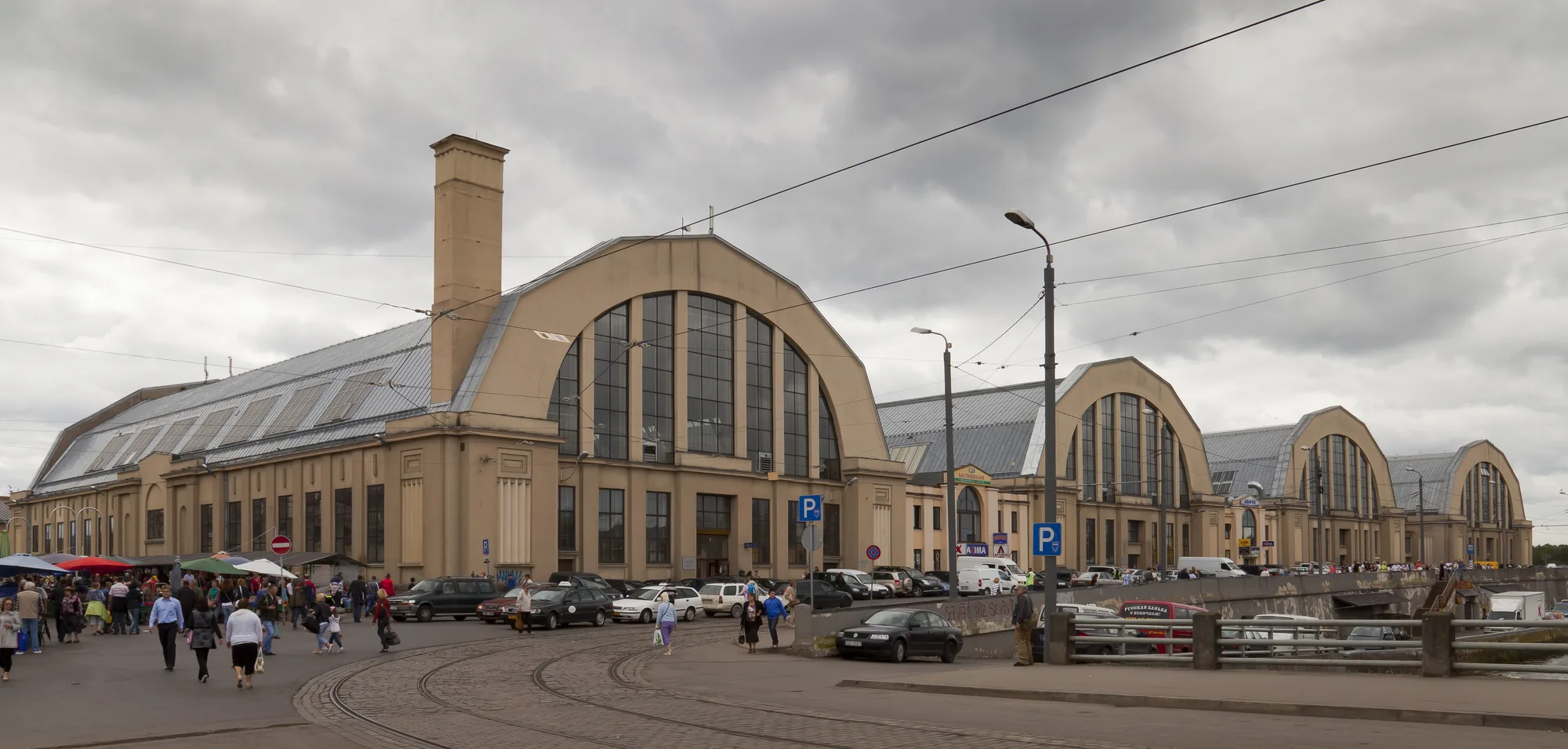
- Its pavilions occupy former German Zeppelin hangars — and it's part of the UNESCO-listed centre.






A simple market plan (that works)
Riga Central Market is big enough to overwhelm if you arrive hungry with no plan. Give yourself a simple structure: do a reconnaissance loop, pick two savory tastes, then one sweet, then leave while you’re still enjoying it.
This is a market you’ll enjoy more if you treat it as an experience, not a mission. The goal isn’t to “finish” it — it’s to taste a few things and understand the city’s everyday rhythm.
- Loop first, buy second (prevents impulse overload).
- Taste small; you can always return to a stall you liked.
- Keep cash handy as a convenience, even if cards are common.
Sources
- LiveRiga: Riga Central Market ↗
Official city tourism overview (good high-level context).
- Riga Central Market (background) ↗
Background context (used sparingly).
A little context (so it feels more meaningful)
If you like knowing what you’re looking at: part of what makes this market special is its scale and the way it functions as everyday Riga — not just a tourist stop.
But don’t over-study it. One minute of context is enough; the rest is about walking, noticing, and tasting.
What to try (practical, not precious)
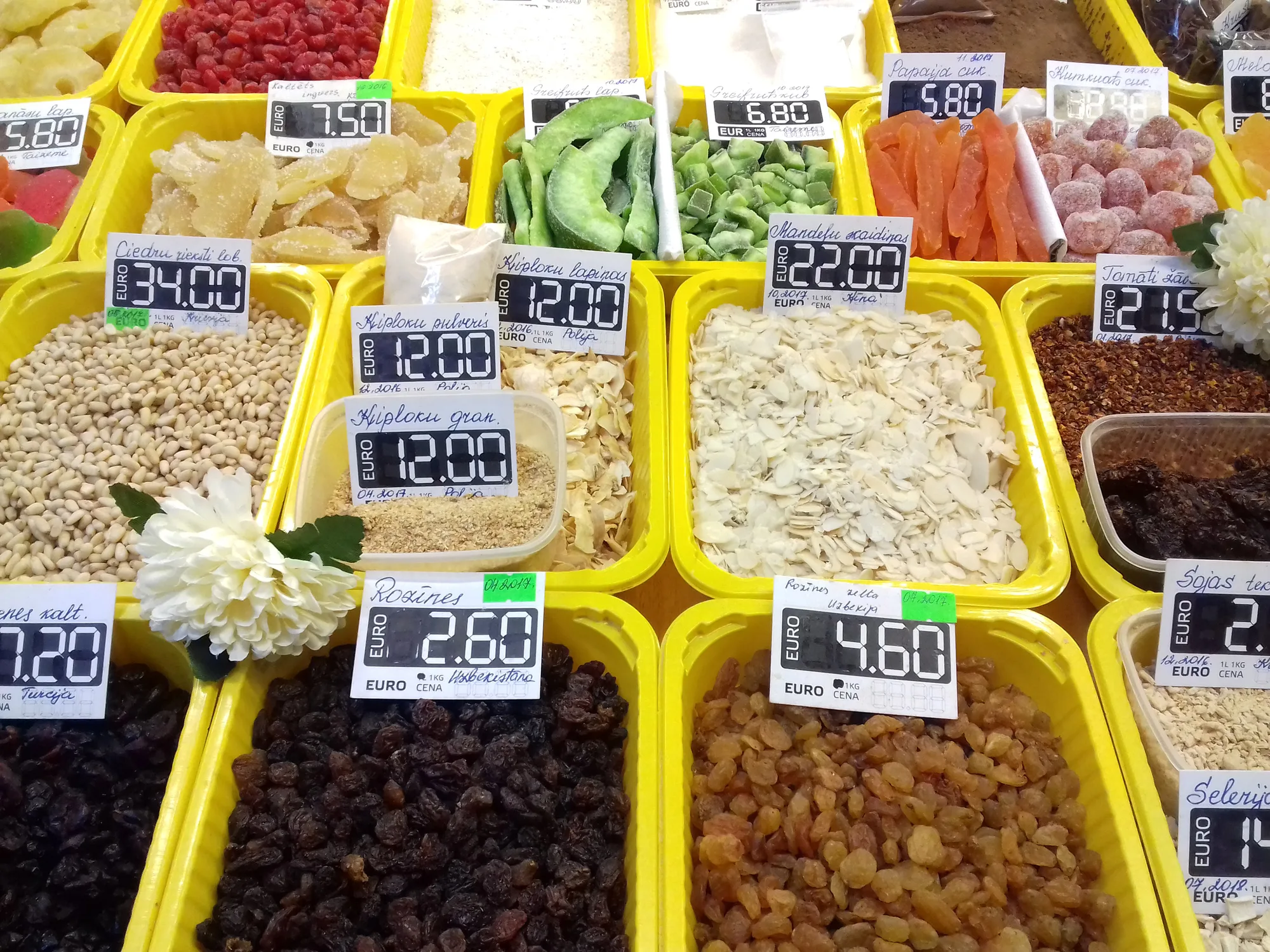
You don’t need a perfect ‘food tour’. The goal is to taste a few local-leaning things and keep moving. If you’re unsure what something is, ask — a quick question saves you a lot of guessing.
The Zeppelin hangars: why the building itself is worth a look
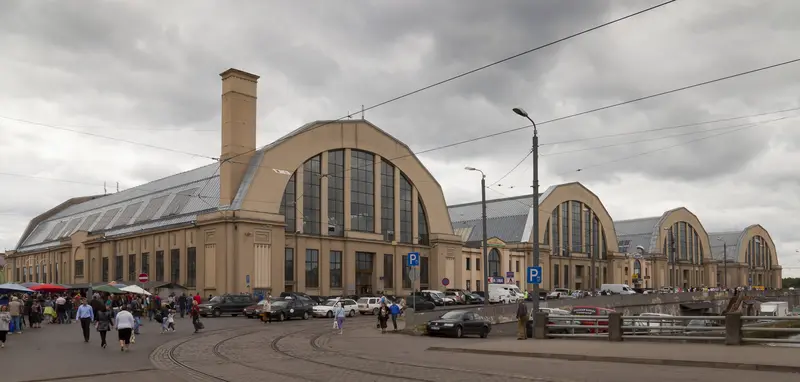
Before you taste anything, step back and look up. Riga Central Market opened in 1930 and was, at the time, one of the largest and most modern markets in Europe. Its huge curved pavilions are built from the reused steel frames of German military Zeppelin (airship) hangars left over from the First World War — the frames were dismantled and re-erected here, which is why the halls feel less like a market shed and more like a hangar with a cathedral’s sense of volume.
The architecture blends those industrial arches with Art Nouveau and Art Deco detailing, and the whole market is part of the Historic Centre of Riga, inscribed on the UNESCO World Heritage List in 1997. You don’t need to study any of this to enjoy a visit, but knowing it changes how the space feels: you’re shopping for cheese under a structure that once sheltered airships.
Practically, the scale is the only thing that catches people out. The halls are long, the aisles repeat, and it’s easy to lose your bearings. Pick one pavilion entrance as your ‘home base’, and don’t worry about seeing every corner — locals don’t either.
- Opened 1930; pavilions reuse First World War Zeppelin-hangar steel frames.
- Part of the UNESCO-listed Historic Centre of Riga (inscribed 1997).
- Treat the scale as the headline ‘sight’, not just a place to shop.
Sources
- Riga Central Market (official) ↗
Official market site — history, pavilions and current working hours.
The five pavilions: what’s in each hall
The indoor market is organised as a row of specialist pavilions, each one historically dedicated to a category of food. Walking them in order is the simplest way to ‘read’ the market instead of wandering randomly.
Reconstruction work has been rolling through the complex pavilion by pavilion in recent years, so a hall you read about may be partly closed or temporarily relocated. Treat the layout below as the long-standing structure and follow the signage on the day; if you're making a special trip for one specific hall, a quick look at the market's news page first saves a wasted journey.
- Meat pavilion: butchers’ counters, sausages and cured meats — the most ‘carnivore’ hall.
- Dairy pavilion: cheeses (look for caraway-flecked local types), curd, sour cream, butter, honey and eggs.
- Fish pavilion: fresh Baltic fish plus the regional speciality — smoked fish, sold whole or by the piece.
- Vegetable/produce pavilion: seasonal fruit and veg, pickles, berries in summer, mushrooms in autumn.
- Gastronomy pavilion: prepared food, bakery, deli and ready-to-eat stalls — the easiest hall for tasting on the spot.
What to buy and taste here (a market-first menu)
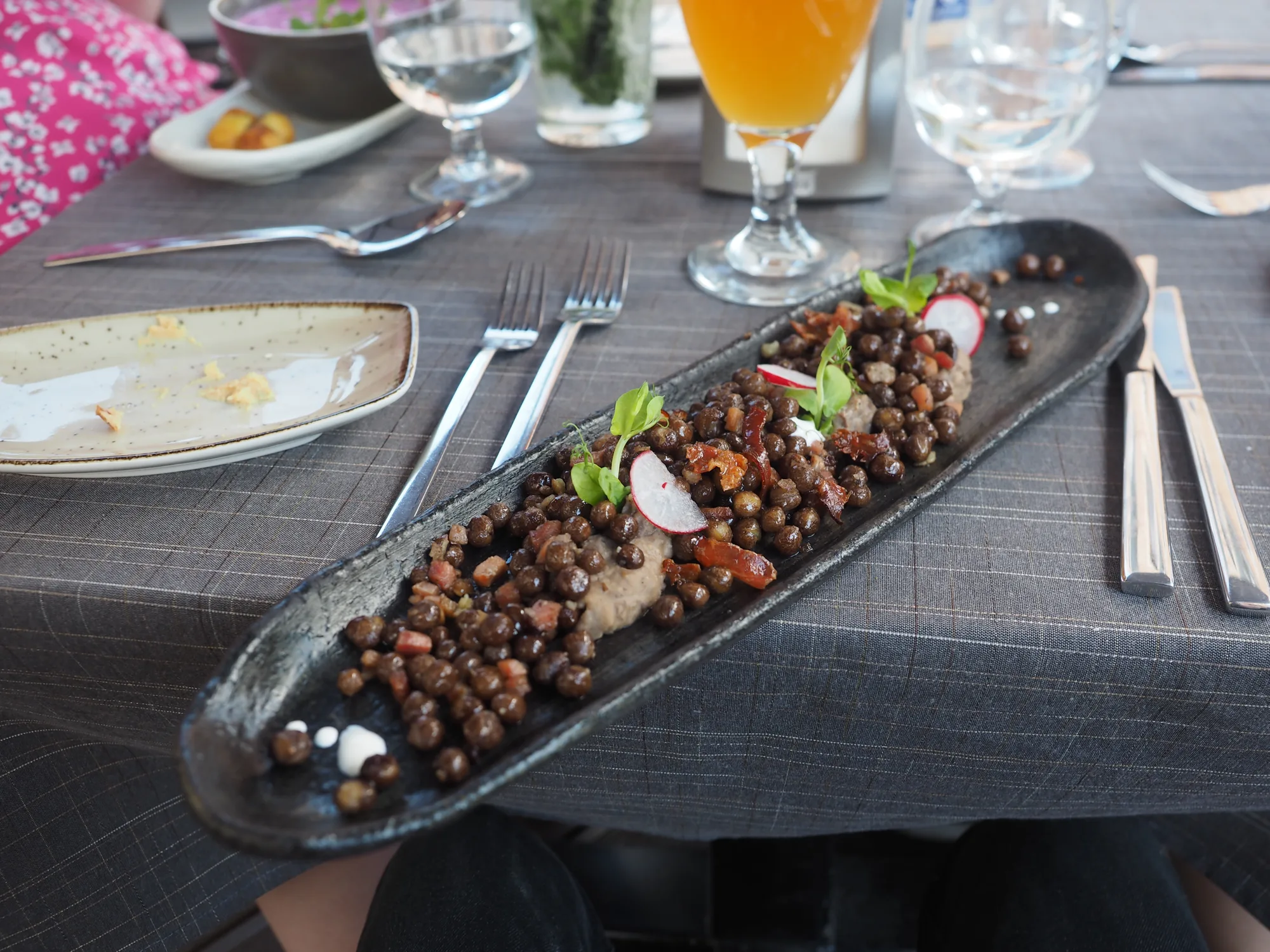
If you want a genuinely local snack loop rather than a souvenir-shop version of one, use the market as your tasting room. None of these are gimmicks — they’re what people here actually eat.
Buy a slice or a small piece of each rather than a full portion. A market visit done well is four or five small bites, not one big meal.
- Rye bread (rupjmaize): the dense, dark, slightly sour loaf at the heart of Latvian eating — the single most ‘Latvian’ thing to buy.
- Smoked fish: a Baltic-coast staple; the fish pavilion is the place to try it.
- Local cheese and curd: caraway-forward cheeses and fresh curd from the dairy hall, ideal with that rye bread.
- Honey: Latvia has a strong beekeeping tradition; jars make an easy, packable gift.
- Berries and mushrooms in season: summer berries and autumn forest mushrooms are a highlight if your timing lines up.
- Pickles and fermented veg: a cold-climate classic, sold loose by weight.
Practical visiting tips
The market sits right beside the central railway station and a short walk from the Old Town, which makes it one of the easiest things in Riga to slot into a day. It’s busiest and best stocked in the morning; some stalls thin out by mid-afternoon, so go earlier if you want the full range rather than the leftovers.
The indoor pavilions run roughly 7:30 to 18:00 (Sundays to 17:00) and the outdoor stalls a touch wider, with Sundays winding down earlier; note the pavilions close for a sanitary day on the first Monday of each month, so don't pin a special trip to that date. Cards are widely accepted, but a little cash makes the smallest stalls frictionless.
- Go in the morning for the best selection; mid-afternoon is calmer but thinner.
- Sundays close earlier — plan around it.
- Keep small cash for tiny stalls even though cards are common.
- Mind your bag in the busiest aisles, as you would in any crowded market.
- Pair it with a riverside or canal walk straight after to reset your pace.

Is Riga Central Market worth visiting?
Yes — and it’s worth it even if you don’t plan to buy much. It’s Europe’s largest market by area, it’s part of the UNESCO-listed centre, and it shows you everyday Riga in a way that no monument can. Go for the building and the atmosphere; the snacks are a bonus.
How long should I spend at the Central Market?
About an hour to ninety minutes is plenty for a relaxed loop with a few tastes. If you’re shopping for a picnic or souvenirs you might linger longer, but you don’t need a half-day — the market rewards a focused visit more than an exhaustive one.
 Location
Riga Central Market
The city’s big market halls — a high-value food stop and a great way to understand everyday Riga fast.
Nearby (walkable)
- Spīķeri
- St. Peter’s Church
- Bremen Town Musicians
- House of the Black Heads
- Latvian Academy of Sciences
- Latvian National Opera
Map pins
Map data © OpenStreetMap contributors · Tiles © OpenFreeMap
 Location
Alberta iela (Art Nouveau)
Riga’s most famous Art Nouveau street — best early for quieter photos and details.
Nearby (walkable)
- Riga Art Nouveau Museum
- Latvian National Museum of Art
- Kronvalda Park
- Esplanāde Park
- Bastejkalna Park
- Freedom Monument
Map pins
Map data © OpenStreetMap contributors · Tiles © OpenFreeMap