 At a glance
- Start with Riga Central Market for a low-stress overview of local staples.
- Plan one cozy café stop per day — it makes cold-weather Riga feel perfect.
- Keep dinners simple: one “nice” meal, one casual local favorite.
 Quick facts
- Getting there
- The Central Market sits beside the Old Town, an easy walk from the centre.
- Best time
- Late morning or early afternoon for the Central Market.
- Best for
- Eating well without over-planning: markets, cafés, and local staples.
- Good to know
- Cards are widely accepted; keep some cash for market stalls.




A food-first way to plan Riga
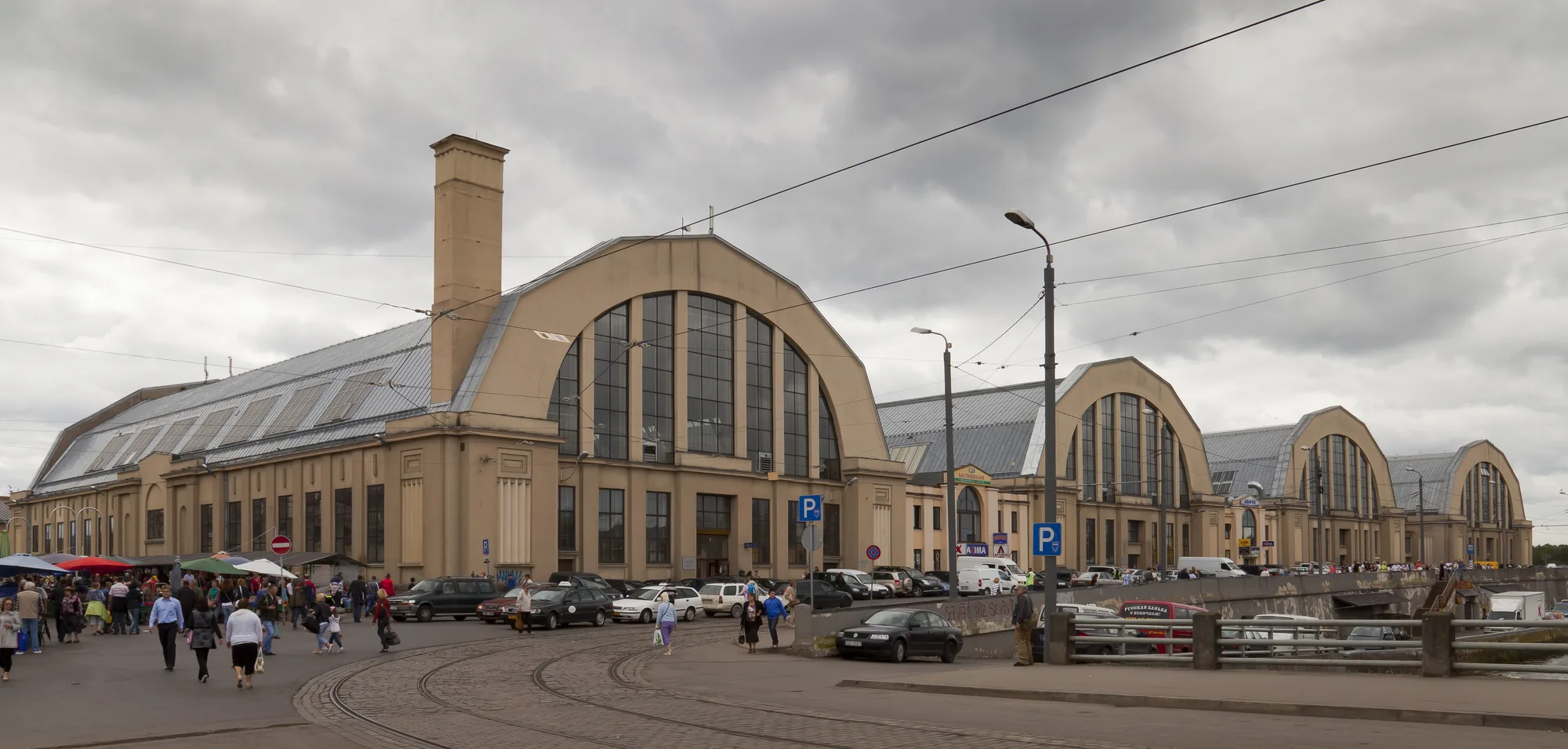
Riga is easiest to eat your way through when you pick one daytime anchor and keep the rest flexible. The best anchor is Riga Central Market — it helps you understand the city’s flavors and rhythms quickly.
Then use cafés and bakeries as comfort stops between walks, especially in cooler seasons.
- Daytime anchor: Riga Central Market (lunch, snacks, or a tasting walk).
- Repeat ritual: one café stop you actually sit down for.
- Dinner rule: choose vibe over hype — cozy beats complicated.
What to do there, what to try, and how to time it.
Food & DrinkLatvian food primerA practical ‘what to try’ list so you can order confidently.
Food & DrinkBest cafés in RigaCozy stops to build into your walking routes.
EssentialsWalking routesLoops that naturally pass cafés and food stops.
ItinerariesItinerariesA practical way to schedule food without overbooking.
Market strategy (so it feels fun, not chaotic)
Go to Riga Central Market with a plan: arrive not too late, wander one hall at a time, and buy small portions. It’s better to taste five small things than to over-commit to one big meal too early.
If you’re short on time, treat the market as a two-stop: one savory bite, one sweet, then back to exploring.
- Best times: late morning or early afternoon.
- If it’s crowded: do a quick loop first, then return to the stalls you liked.
- Pair with: a river walk after (reset your pace).
Sources
- Riga Central Market (background) ↗
History and overview (useful context).
Why the Central Market is the place to start
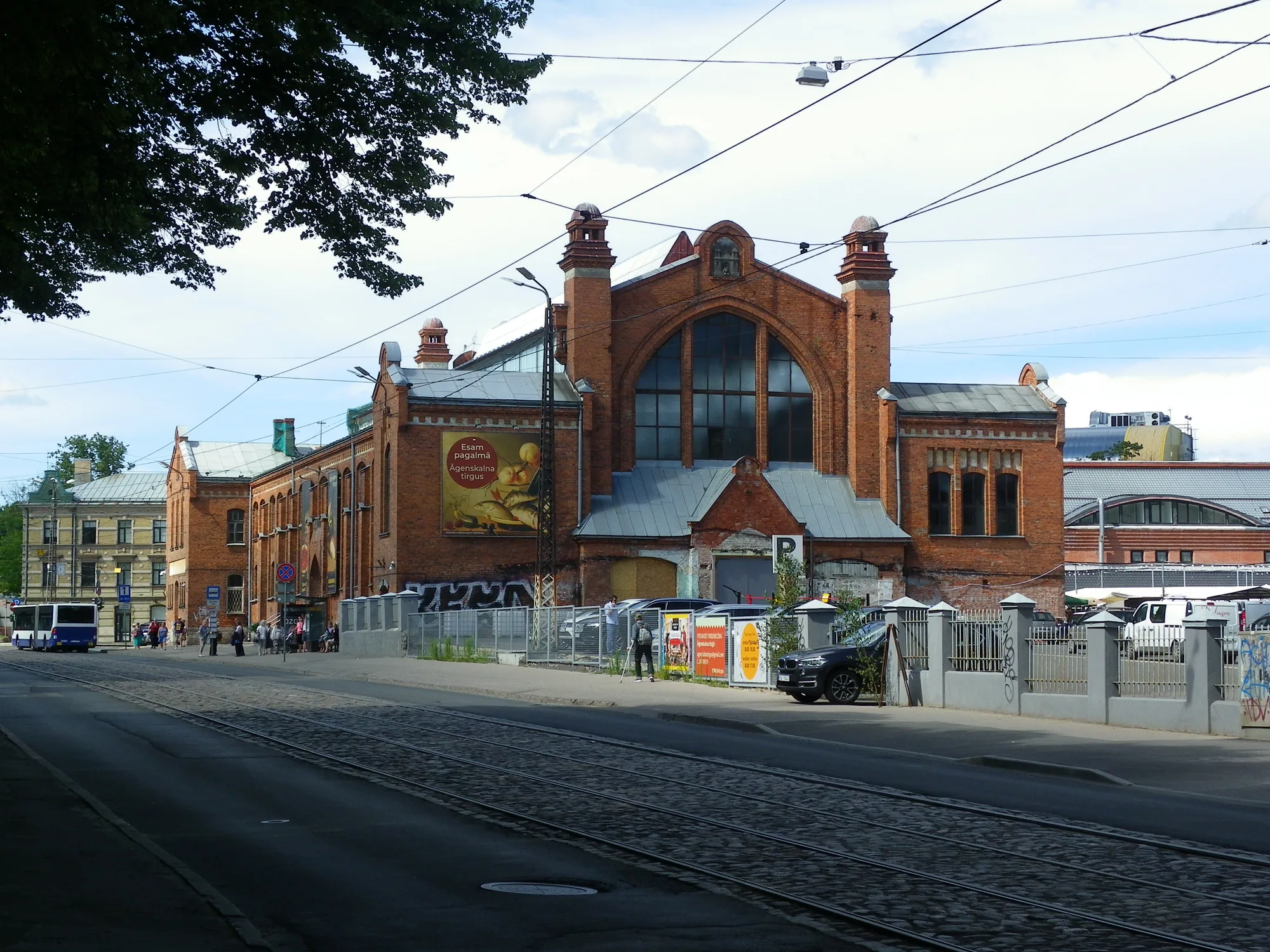
Riga Central Market isn't just a place to eat — it's one of the city's great sights, and understanding it makes eating here more fun. It opened in 1930 and was, at the time, one of the largest and most modern markets in Europe. Its most striking feature is its five great pavilions, whose curved roofs were built by reusing the metal frames of First World War German Zeppelin hangars. The market sits right beside the Old Town, and in 1998 its territory was added — together with Old Riga — to the UNESCO World Heritage List.
Each pavilion specialises: there are halls broadly devoted to meat, dairy, fish, vegetables, and gastronomy, with sprawling outdoor stalls around them for produce, flowers, and seasonal goods. That structure is your map. Rather than trying to ‘do’ the whole market, pick a pavilion or two, graze small portions, and let the place show you what Latvians actually eat day to day — smoked fish, dark rye bread, cheeses, pickles, berries and mushrooms in season, and honey.
- Opened 1930; five pavilions built from reused WWI Zeppelin-hangar frames.
- UNESCO-listed (with Old Riga) since 1998; right beside the Old Town.
- Halls specialise — meat, dairy, fish, vegetables, gastronomy — plus outdoor stalls.
- Strategy: graze small portions across one or two halls, don't try to see it all.

Sources
- Riga Central Market (LiveRiga) ↗
Official tourism page with history and visitor info.
- Central Market hours (official) ↗
Pavilions roughly 7:30–18:00 (Sun to 17:00); closed the first Monday of the month.
Latvian dishes worth trying
Latvian food is hearty, seasonal, and built around what the land and the Baltic give: rye, root vegetables, pork, dairy, fish, forest berries, and mushrooms. It rewards curiosity more than a long shopping list, so aim to try a handful of genuinely local things rather than chasing a checklist.
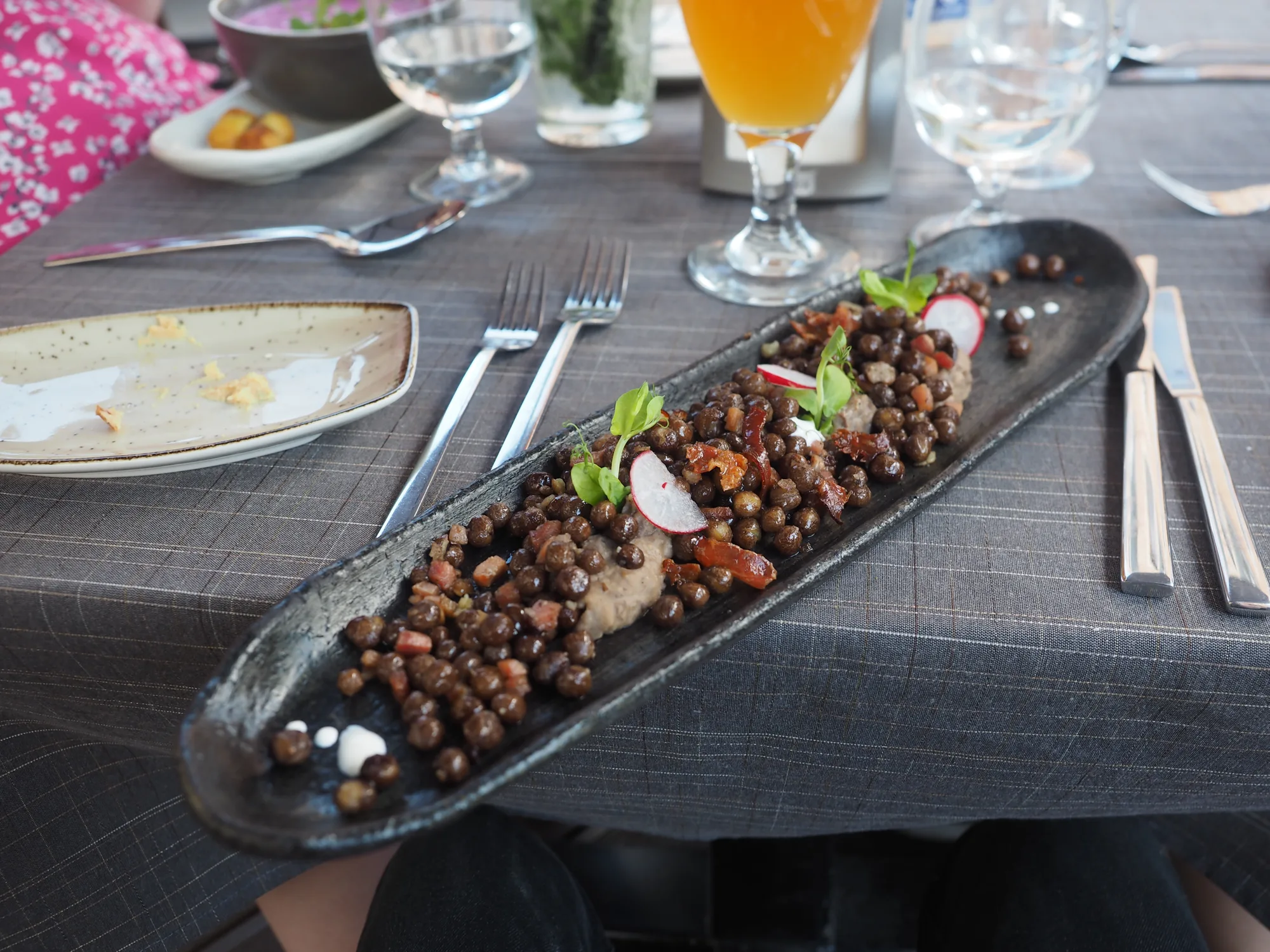
The national dish is grey peas with bacon (pelēkie zirņi ar speķi) — dried grey peas simmered with smoked pork and onion, usually eaten with rye bread; it is traditional Christmas fare but available year-round. Dark, dense rye bread (rupjmaize) accompanies almost every meal, and you'll also meet it as a sweet: a layered rye-bread dessert with cream and jam. Other staples to look for include cold beetroot soup in summer (a vivid pink, served chilled with a boiled egg), smoked and pickled fish from the Baltic, curd snacks and fresh cheeses, and honey and berry preserves from the market.
- Grey peas with bacon (pelēkie zirņi ar speķi): the national dish — try it once.
- Rye bread (rupjmaize): a staple at meals, and the base of a popular dessert.
- Cold beetroot soup: a refreshing summer classic, served chilled.
- Smoked/pickled Baltic fish, curd snacks, and forest berries in season.
Sources
- Grey peas (background) ↗
Context on Latvia's national dish.
What to drink in Riga
The drink most associated with the city is Riga Black Balsam, a dark, bitter herbal liqueur whose recipe dates to 1752, when a Riga pharmacist named Abraham Kunze first blended it. It mixes botanicals — gentian, wormwood, and many others — with honey and other sweeteners; the classic version is a potent 45%. Locals drink it neat in small measures, in coffee, in tea, or in cocktails, and many find the gentler blackcurrant version an easier introduction. It started life as a medicinal tonic, which explains the no-nonsense bitterness.
Latvia also has a lively craft-beer and cider scene, and you'll find good local brews in the city's bars. For a non-alcoholic option, look for kvass — a lightly fermented, low- or no-alcohol drink made from rye bread, sold from tanks in summer. Drink prices swing widely between a neighbourhood bar and a tourist-square terrace, so it's worth a glance at the list before you settle in.
- Riga Black Balsam: bitter herbal liqueur (recipe from 1752), classic strength 45%.
- Easier entry points: the blackcurrant Balsam, or Balsam in coffee/cocktails.
- Local craft beer and cider are widely available in the bars.
- Kvass: a rye-bread drink, refreshing and family-friendly in summer.
Sources
- Riga Black Balsam (background) ↗
History and composition of Latvia's signature spirit.
Café and bakery culture (the everyday pleasure)
Riga's café culture is a genuine highlight, and it is the easiest way to slow a day down. The city is well stocked with bakeries and coffee houses, from grand old-world rooms to small independent spots, and they come into their own in the cooler months when a warm interior is exactly what you want between walks. Pastries and cakes are taken seriously here; pair one with a coffee and you have the perfect mid-afternoon reset.
The trick is to treat one proper café stop as a daily ritual rather than a grab-and-go. Sit down, warm up, watch the street, and let the trip breathe. The bohemian Miera iela area and the Quiet Centre are particularly rich in characterful cafés, and many spots along your walking routes will tempt you in.
- Make one sit-down café stop a daily ritual, especially in cold weather.
- Bakeries and cake shops are excellent — pair a pastry with coffee.
- Café-dense areas: Miera iela and the Quiet Centre.

Eating by season
Latvian cooking follows the calendar more than in many cuisines, so the season shapes what's best. Late spring and summer bring fresh produce, berries, and chilled dishes like cold beetroot soup, plus outdoor café tables and market stalls heavy with strawberries, then blueberries and chanterelle mushrooms as summer turns. Autumn is mushroom and root-vegetable season, and the market fills with preserves, honey, and apples.
Winter leans into the warming, hearty end of the menu — grey peas, sauerkraut, rich soups, and dark bread — and it is when the cosy cafés and the Christmas-market food stalls on the Old Town squares feel most rewarding. Whatever the time of year, the market is the quickest way to see what's actually in season right now.
- Summer: berries, chilled soups, outdoor tables, market produce at its peak.
- Autumn: mushrooms, root vegetables, preserves, honey, apples.
- Winter: hearty dishes, dark bread, and Christmas-market food stalls.
Practical eating notes
A few habits keep meals easy. Cards are accepted almost everywhere, but it is worth carrying a little cash for market stalls and small vendors. Tap water is safe to drink. Tipping is modest and appreciated rather than expected — rounding up or roughly 10% for good table service is normal. Vegetarians will find the modern café and restaurant scene accommodating, though the most traditional dishes are meat- and dairy-heavy, so the market and contemporary spots are your friends for plant-based eating.
As a rough plan, a market lunch is usually the best value in the centre, while a single ‘nice’ dinner is worth booking ahead in peak season. Menus and prices drift, so treat anything you read online as a guide rather than a quote.
Rye bread: the heart of Latvian eating
If one food explains Latvian cooking, it is rye bread (rupjmaize). Dark, dense, slightly sour, and naturally long-keeping, it has been the backbone of the diet for centuries and still accompanies most meals. It turns up everywhere: as the base for open sandwiches piled with smoked fish or cured meat, fried into crunchy garlic-rubbed snack sticks served in bars, and even as a dessert — a sweet layered pudding of crumbled rye, cream, and berry jam that is genuinely worth ordering.
Treat bread as something to taste deliberately rather than ignore. Buy a small loaf or a few slices at the Central Market, try the fried rye snack with a beer, and finish at least one meal with the rye dessert. It is cheap, distinctly Latvian, and a quick way to understand the local palate.
- Everyday: dark rye (rupjmaize) alongside almost any meal.
- In bars: fried, garlic-rubbed rye snack sticks (a classic with beer).
- Sweet: the layered rye-bread-and-cream dessert — order it once.
The wider dining scene (beyond tradition)
Alongside the hearty classics, Riga has a genuinely modern dining scene. The last couple of decades have brought a wave of contemporary Latvian restaurants that cook seasonally with local produce — much of it from the very market you can walk through — alongside good international options, from Georgian and Italian to ramen and burgers. The result is a city where you can eat traditionally one night and adventurously the next without much effort.
For a relaxed first trip, the simplest approach works best: anchor your eating around the market by day, choose cosy over hyped for casual meals, and reserve one slightly nicer dinner where you slow down and order a few local dishes. You don't need to research a long list of restaurants in advance — Riga's centre is compact enough that wandering until something feels right is a perfectly good strategy.
- Modern Latvian cooking: seasonal, market-driven, increasingly ambitious.
- Good international range too — useful for variety on a longer stay.
- Plan light: one ‘nice’ dinner, the rest casual and cosy.
A simple food day, hour by hour
If you like a little structure, this is an easy way to weave food through a sightseeing day without overbooking. It keeps the budget sensible and leaves room to wander.
Start with a relaxed café breakfast — coffee and a pastry — near wherever you are staying. Mid-morning, sightsee on a light stomach. Around lunch, head to the Central Market and graze: a smoked-fish open sandwich, some cheese or a curd snack, a piece of rye bread, and something sweet, eaten as you walk the halls. In the afternoon, build in one proper café stop to warm up and rest your feet. For dinner, pick one cosy restaurant and order a couple of local dishes — grey peas, a Baltic-fish plate — finishing with the rye dessert and, if you're curious, a small glass of Black Balsam.
- Breakfast: café coffee and a pastry, taken slowly.
- Lunch: graze the Central Market — savoury, then sweet.
- Afternoon: one sit-down café stop as a reset.
- Dinner: a cosy spot, a couple of local dishes, rye dessert, maybe a Balsam.
What food is Riga known for?
Riga is known for hearty Latvian staples — grey peas with bacon (the national dish), dark rye bread, smoked Baltic fish, and seasonal berries and mushrooms — and for Riga Black Balsam, a bitter herbal liqueur with a recipe dating back to 1752. The Central Market is the single best place to taste your way through local food in one stop.
Is Riga good for vegetarians and vegans?
Yes, increasingly so. The most traditional dishes lean on meat and dairy, but Riga's modern café and restaurant scene is well used to plant-based diets, and the Central Market is a treasure trove of fruit, vegetables, berries, nuts, and bread. In the centre you'll find dedicated vegetarian and vegan-friendly spots, and most contemporary restaurants offer meat-free options. If you stick to traditional taverns, ask what's available — but you will not go hungry.
Smoked fish and the Baltic table
Latvia is a Baltic country, and fish is central to its food. Smoked and cured fish — herring, sprats, mackerel, eel, and more — turn up across the market's fish hall and on traditional menus, often served simply with rye bread, sour cream, dill, and boiled potatoes. Tinned sprats are a classic local product and an easy edible souvenir. If you only try one fishy thing, make it a smoked-fish open sandwich on dark rye from a market stall.
Pickling and preserving run deep here too, a legacy of long winters: expect pickled cucumbers, sauerkraut, and jars of berries and mushrooms alongside the fresh produce. These are not afterthoughts but a real part of how Latvians eat, and the market is the best place to taste the range without committing to a full restaurant meal.
- Try: a smoked-fish open sandwich on rye from the market fish hall.
- Classic souvenir: tinned Latvian sprats.
- Look for: pickles, sauerkraut, and preserved berries and mushrooms.
Do I need to book restaurants in advance?
For casual meals and the market, no — walking in is normal. For a popular or higher-end restaurant, especially on a weekend evening or in peak summer, booking ahead is sensible. A good rule of thumb: keep lunches spontaneous and reserve only the one dinner you really care about.
Is the Central Market worth visiting just to eat?
Absolutely. Even if you buy almost nothing, it is free to walk through and one of Riga's most atmospheric places, with its Zeppelin-hangar pavilions and busy stalls. For eating, it is the easiest and best-value way to sample local staples — smoked fish, rye bread, cheeses, pickles, and seasonal produce — without committing to a full sit-down meal. Go late morning or early afternoon, graze small portions, and pair it with a riverfront walk afterwards.
 Location
Riga Central Market
The city’s big market halls — a high-value food stop and a great way to understand everyday Riga fast.
Nearby (walkable)
- Spīķeri
- St. Peter’s Church
- Bremen Town Musicians
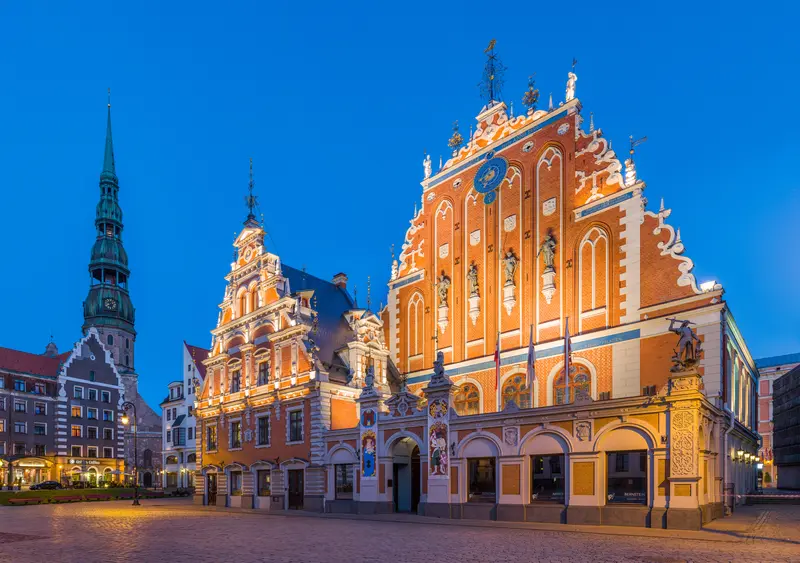
- House of the Black Heads
- Latvian Academy of Sciences
- Latvian National Opera
Map pins
Map data © OpenStreetMap contributors · Tiles © OpenFreeMap
