 At a glance
- The best strategy is details-first: short route, slow pace, eyes up.
- Go earlier in the day for quieter photos and less street noise.
- Pair with one café stop so the walk feels relaxed, not ‘tasky’.
 Quick facts
- Cost
- Free to walk the streets; the Art Nouveau Museum charges admission.
- Time needed
- A short, slow 1–2 hour walk is plenty.
- Getting there
- Centred on Alberta iela, walkable from the centre and the Old Town.
- Best time
- Morning for quieter photos and softer light.
- Good to know
- Riga has one of Europe's densest concentrations of Art Nouveau architecture (UNESCO-listed centre).




Why Riga feels so design-forward (fast context)
Riga’s Art Nouveau isn’t a single building or one photo spot — it’s a district-scale feeling. You don’t need to know the whole architectural history to enjoy it; you just need the right pacing and one or two ‘reference points’.
Riga’s historic centre is UNESCO-listed, and one of its signatures is early 20th‑century architecture — which is why a short, details-first walk can feel like a highlight even on a quick trip.
Sources
- UNESCO: Historic Centre of Riga ↗
Background context on the historic centre.
- LiveRiga: Riga Art Nouveau ↗
Official overview and pointers for the district.
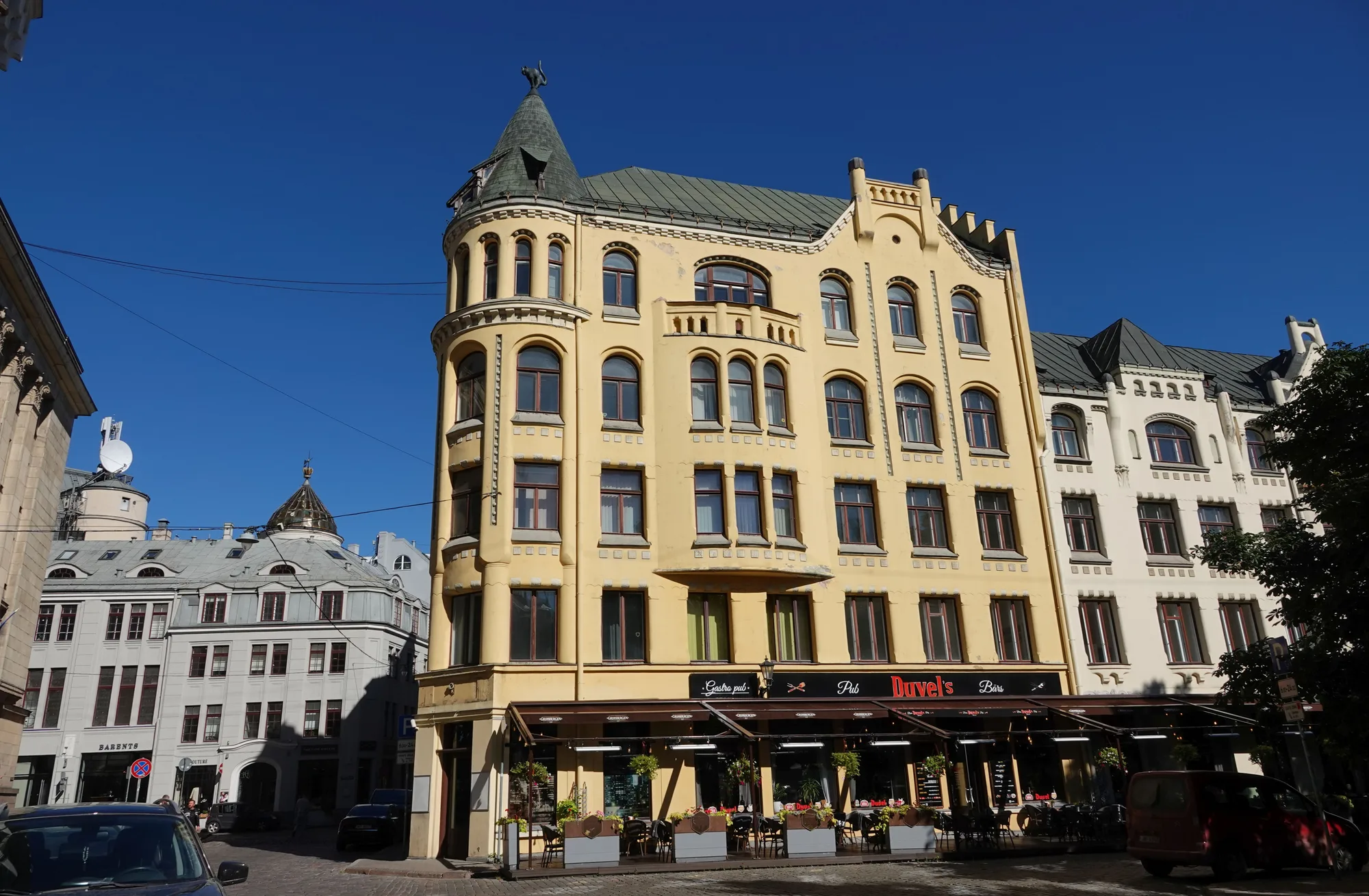
A simple architecture walk (map)
This walk is intentionally short. Riga’s Art Nouveau is dense — you don’t need a long route, you need time to look up and notice the patterns.
Map pins
Map data © OpenStreetMap contributors · Tiles © OpenFreeMap
- Best time: morning for calm and cleaner photos.
- Walk rule: stop often; details are the point.
- Pair with: a café stop right after (moment > mileage).
Sources
- LiveRiga: Riga Art Nouveau ↗
Official city tourism overview (good context).
How to look (so it’s actually enjoyable)
Art Nouveau is a ‘micro’ experience. The joy is in patterns, faces, ironwork, curves, and repeated motifs. Give yourself permission to stop, take a photo, and move on without feeling behind schedule.
- Look for: faces, masks, floral motifs, and curved balconies.
- Do a short loop twice rather than a long loop once (it trains your eye).
Why Riga has so much Art Nouveau
In the decades around 1900, Riga was booming — by then one of the largest cities in the Russian Empire and a wealthy industrial port. As the city expanded beyond its old fortifications, a prosperous, ambitious population filled the new boulevards with apartment buildings in the era’s most fashionable style: Art Nouveau (Jugendstil). The scale was extraordinary, and a large share of the buildings in the central districts went up in this style within a short, intense building boom in the early 1900s.
The result is one of the greatest concentrations of Art Nouveau architecture anywhere in Europe — so dense that it is part of why the historic centre is UNESCO-listed. You are not visiting a single monument; you are walking through a whole city built, almost all at once, at the height of a design movement.
- Built mostly in the early-1900s boom, when Riga was a major imperial city.
- A very large share of the central districts went up in the Jugendstil style.
- Among Europe’s densest collections of Art Nouveau — part of the UNESCO listing.
Sources
- LiveRiga: Art Nouveau ↗
Official overview of Riga’s Art Nouveau heritage.
Where to walk: Alberta iela and around
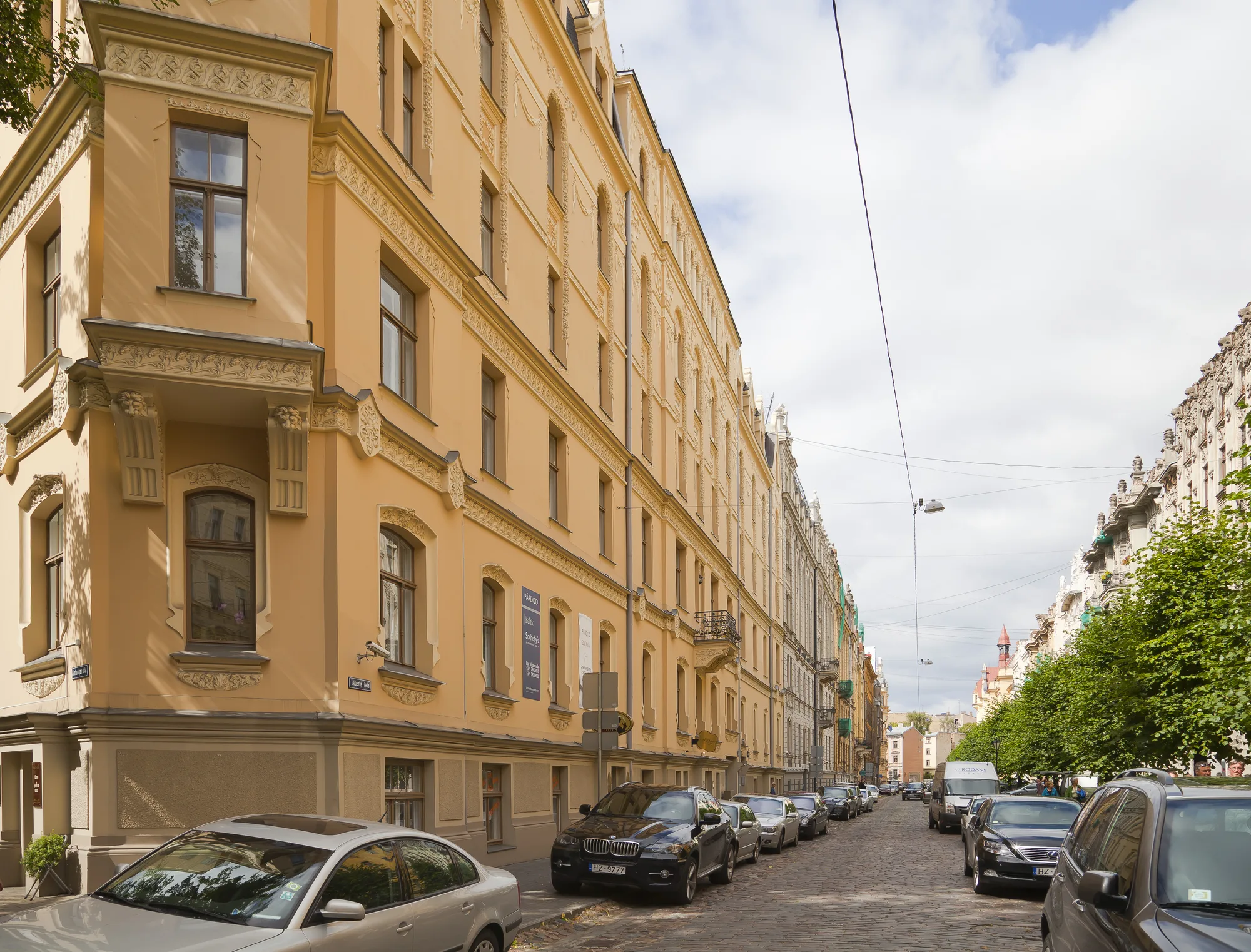
The single best street is Alberta iela, often called the jewel of Riga’s Art Nouveau. Its showpiece façades were built in a remarkably short span in the early 1900s, several of them designed by the engineer Mikhail Eisenstein — father of the film director Sergei Eisenstein — in a theatrically decorative style packed with sculpted faces, masks, mythical figures and floral motifs. A handful of his most flamboyant buildings stand within a few doors of one another, which is why a very short street can hold your attention for an hour.
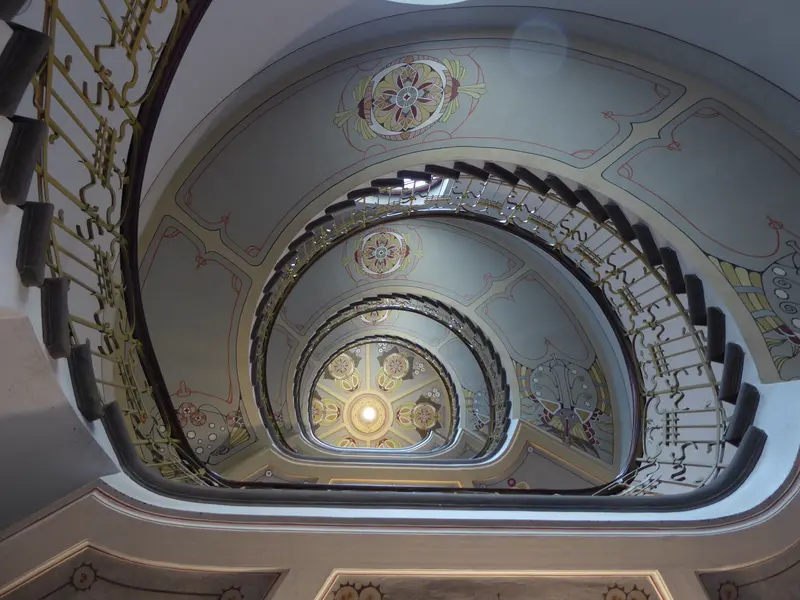
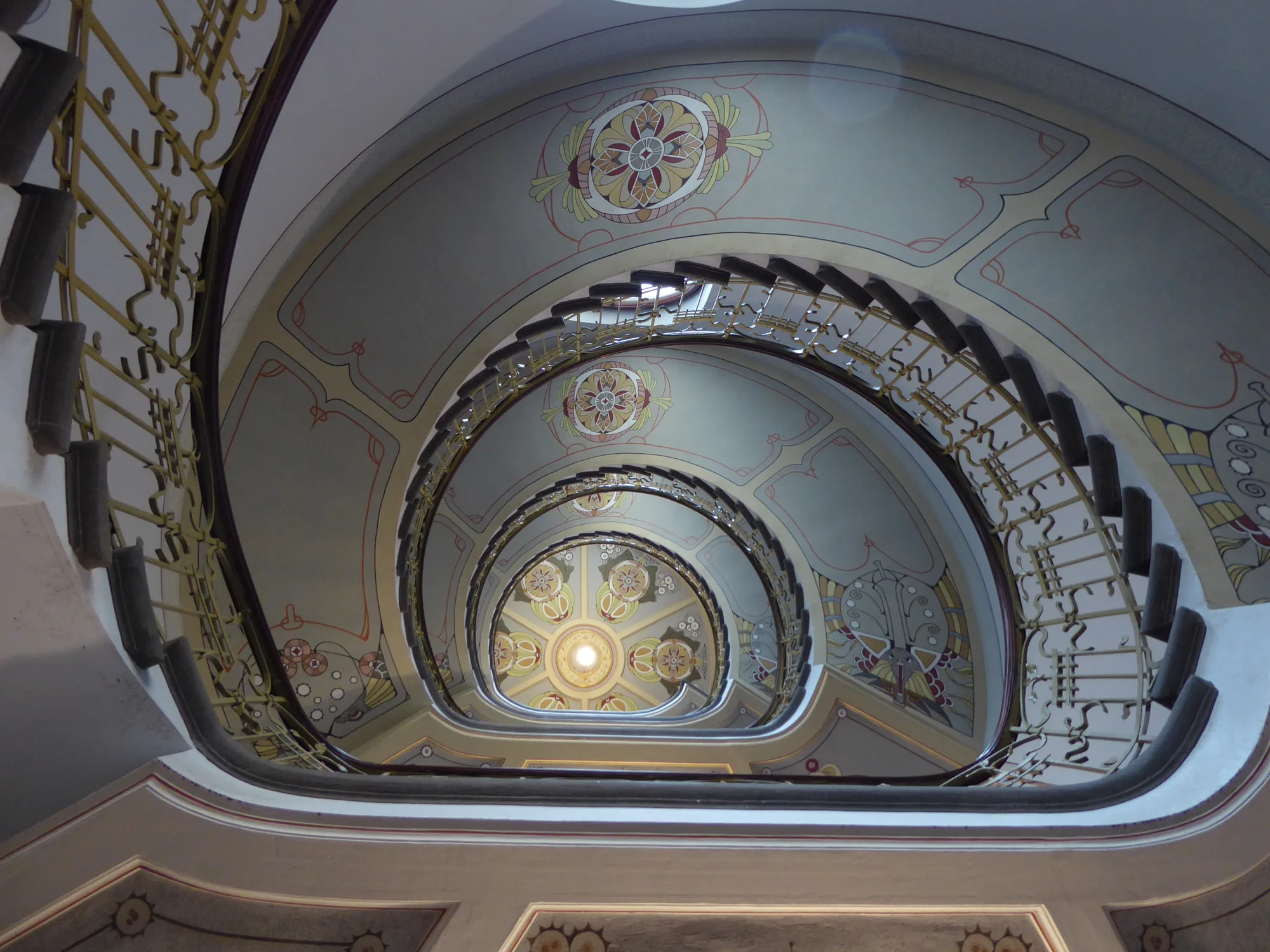
From Alberta iela it is a few steps to Elizabetes iela, which has more Eisenstein work, and into the surrounding leafy ‘Quiet Centre’ streets where the style runs block after block in calmer, ‘National Romantic’ and perpendicular variants too. Add the Riga Art Nouveau Museum, set in a genuine period apartment, if you want to see how people actually lived behind these façades. Keep the route short and double back — the joy is in noticing, not in distance.
- Alberta iela: the star street; several flamboyant Mikhail Eisenstein façades.
- Elizabetes iela & the ‘Quiet Centre’: more of the same, block after block.
- Riga Art Nouveau Museum: a restored period apartment for interior context.
Sources
- LiveRiga: Alberta Street ↗
Official overview of the standout street.
Getting there and timing it
The Art Nouveau streets are in the ‘Quiet Centre’ north of the Esplanāde, an easy 10–15 minute walk from the Old Town. If you’d rather ride, Rīgas Satiksme trolleybuses and trams run along the nearby boulevards (the area around K. Valdemāra iela and Elizabetes iela), leaving a short walk to Alberta iela. Most visitors simply fold the walk into a Centrs day, since the boulevards and parks lie right between the Old Town and these streets.
Go in the morning for softer light and quieter pavements — Alberta iela can get busy with tour groups and other photographers later in the day. Pair the walk with one café stop nearby so it feels like a pleasure rather than a task, and remember these are lived-in residential buildings: admire the façades from the street and keep noise down.
- 10–15 min walk from the Old Town; trams/trolleybuses run along the boulevards.
- Morning is best for light and fewer crowds on Alberta iela.
- They’re residential buildings — enjoy the façades from the street.
Sources
- Rīgas Satiksme ↗
Official Riga public-transport routes and tickets.
Who this walk is for
This is a highlight for anyone who likes architecture, design or photography, and a pleasant surprise for travellers who didn’t expect to care — the façades are flamboyant enough to win people over. It works as a short, self-contained morning, which makes it ideal for couples, solo wanderers and design-curious families alike. Even on a tight trip it earns an hour, because the payoff per minute is so high.
- Best for: architecture, design and photography lovers.
- Great as: a short, self-contained morning before a café stop.
- Even on a tight trip, an hour here is well spent.
Where exactly is Riga’s Art Nouveau district?
There isn’t a single fenced ‘district’ — the style is spread across the central and ‘Quiet Centre’ streets just north of the Old Town and the Esplanāde. The most concentrated, photogenic stretch is Alberta iela, with Elizabetes iela close by; from there the architecture continues through the surrounding residential blocks. Start at Alberta iela and let the surrounding streets pull you along.
Do I need to pay or book anything?
No — the streets and façades are free and open to walk at any time, which is the main event. The only paid option is going inside the Riga Art Nouveau Museum for interior context, and it’s a small, worthwhile stop if you want to see how an apartment of the era was furnished. Everything else is a free, self-guided stroll, so you can come and go whenever the light or your mood suits.
How long should an Art Nouveau walk take?
Plan for one to two hours and no more. The streets are dense and compact, so the experience is about looking closely rather than covering distance — a short loop done slowly, ideally walked twice, beats a long route rushed. Add half an hour if you go inside the Art Nouveau Museum, and another short stretch if you want to fold in a café break nearby.