 At a glance
- Go early for calm lanes; go late for glow — midday can feel compressed.
- Old Town is best as a loop: one anchor square + one viewpoint + wandering time.
- Skip the urge to cover everything; Riga reads better when you slow down.
 Quick facts
- Cost
- Free to walk; pay only for any church tower or museum you enter.
- Time needed
- A half-day loop, easily a full one with stops.
- Getting there
- The historic core is pedestrianised — explore it entirely on foot.
- Best time
- Early morning for calm lanes, early evening for light and atmosphere.
- Good to know
- The Historic Centre of Riga is a UNESCO World Heritage Site.




A simple Old Town loop (map)
Use this as your default first loop. It’s compact, scenic, and leaves room for detours — which is the whole point of Vecrīga.
Map pins
Map data © OpenStreetMap contributors · Tiles © OpenFreeMap
- Time it right: morning (calm) or early evening (light + atmosphere).
- Build in a café stop you actually sit down for.
- Choose one viewpoint, not three.
How to make Old Town feel less touristy
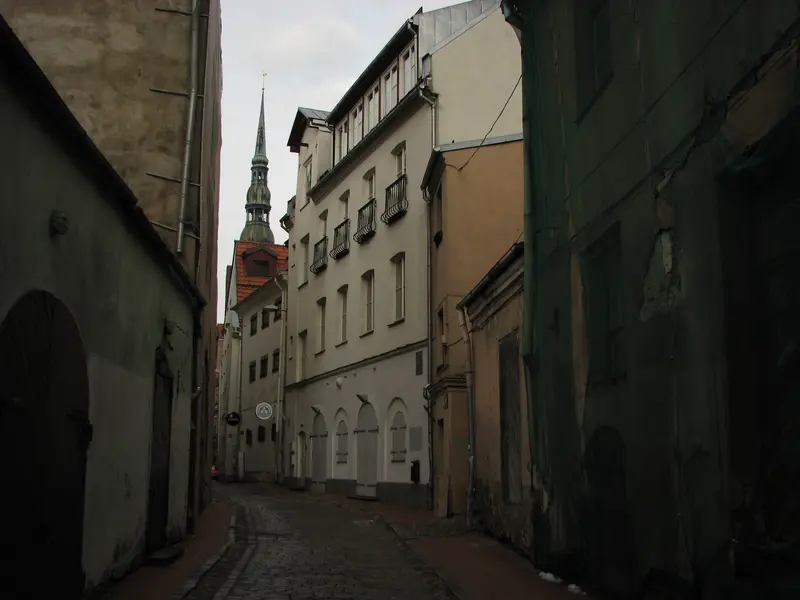
Old Town will always have tourists — the trick is visiting in a way that doesn’t feel like you’re in a funnel. Go early, take side streets, and choose one ‘anchor’ rather than chasing every landmark.
If you’re on a weekend, do your Old Town loop in the morning and save architecture (Centrs) for the afternoon.
And if you like a bit of context: Riga’s historic centre is UNESCO-listed — which helps explain why the area feels so layered even on a short walk.
- Avoid: peak midday crowds on the most obvious streets.
- Do: short ‘look up’ pauses — Riga’s charm is in details.
- Upgrade: end with a canal/park stroll to decompress.
Sources
- UNESCO: Historic Centre of Riga ↗
Context for why the old centre is significant.
Why Vecrīga matters (a little history)
Riga was founded in 1201, and Vecrīga is the medieval and early-modern heart that grew up inside the city walls — a compact tangle of cobbled lanes, merchant houses, guild halls and church spires shaped by centuries of Hanseatic trade and successive German, Swedish and Russian rule. The Historic Centre of Riga was inscribed on the UNESCO World Heritage List in 1997, recognising both the medieval core and the surrounding 19th–20th-century city as an exceptionally well-preserved urban landscape.
Knowing that backstory changes how the walk feels. The layered look of the lanes — Gothic brick beside Baroque and Art Nouveau — isn’t an accident; it is what happens when a wealthy trading city keeps rebuilding itself in place for 800 years. You don’t need to study any of it to enjoy a wander, but a single fact or two makes the details click.
- Riga was founded in 1201; Vecrīga is its walled medieval core.
- The Historic Centre of Riga is a UNESCO World Heritage Site (inscribed 1997).
- Centuries of Hanseatic trade and German/Swedish/Russian rule shaped the look.
Sources
- UNESCO: Historic Centre of Riga ↗
Official inscription (1997) and significance.
The landmarks worth knowing
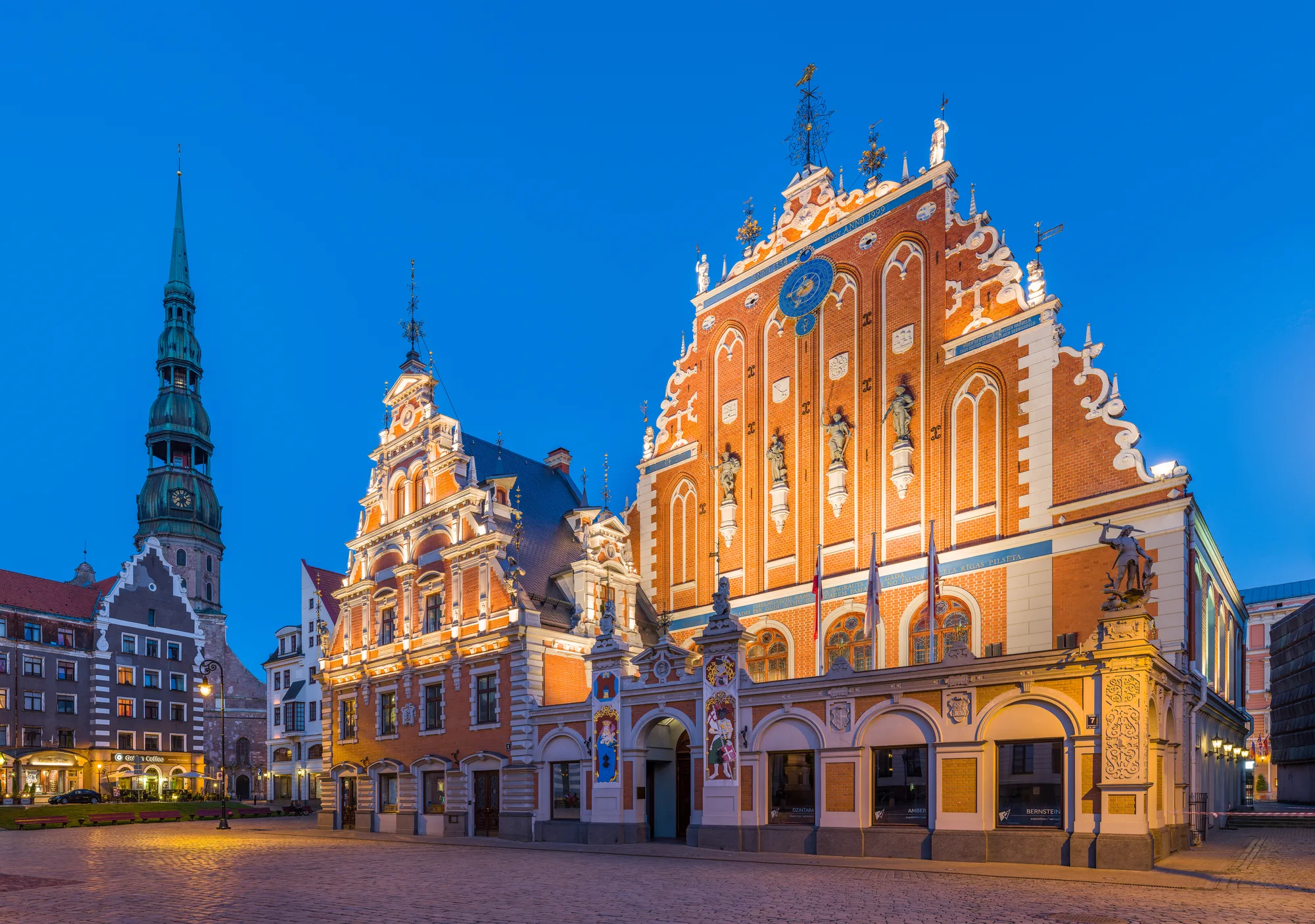
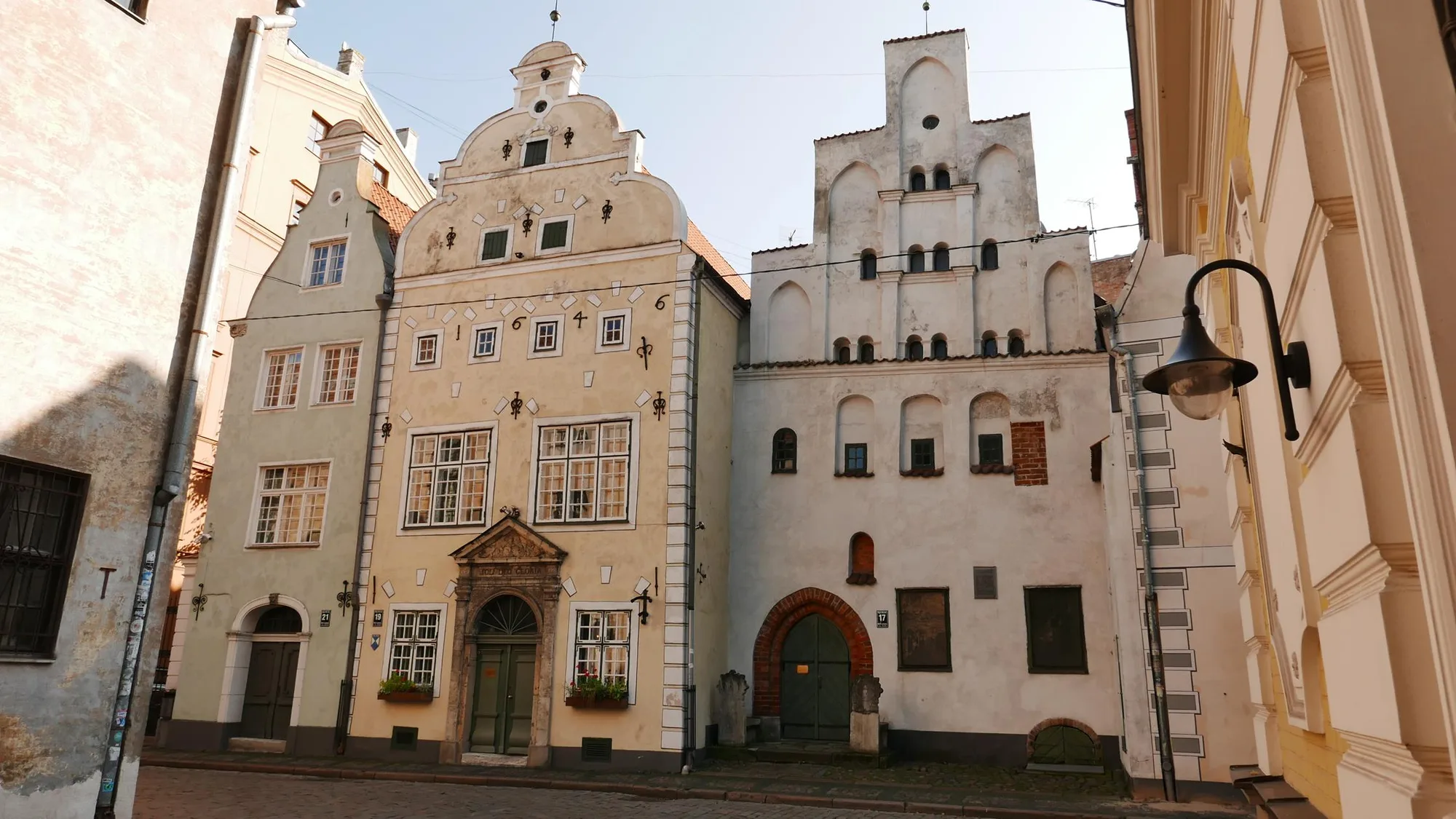
A few stops give the Old Town its shape. On Town Hall Square stands the House of the Black Heads, an ornate guild house first built in the 14th century for an association of unmarried merchants; destroyed in the Second World War and demolished in the Soviet era, it was faithfully rebuilt in the late 1990s and is now the square’s showpiece. Nearby, the Three Brothers are the oldest dwelling houses in the city, a row of medieval-to-17th-century homes that show how the townhouse evolved over time.
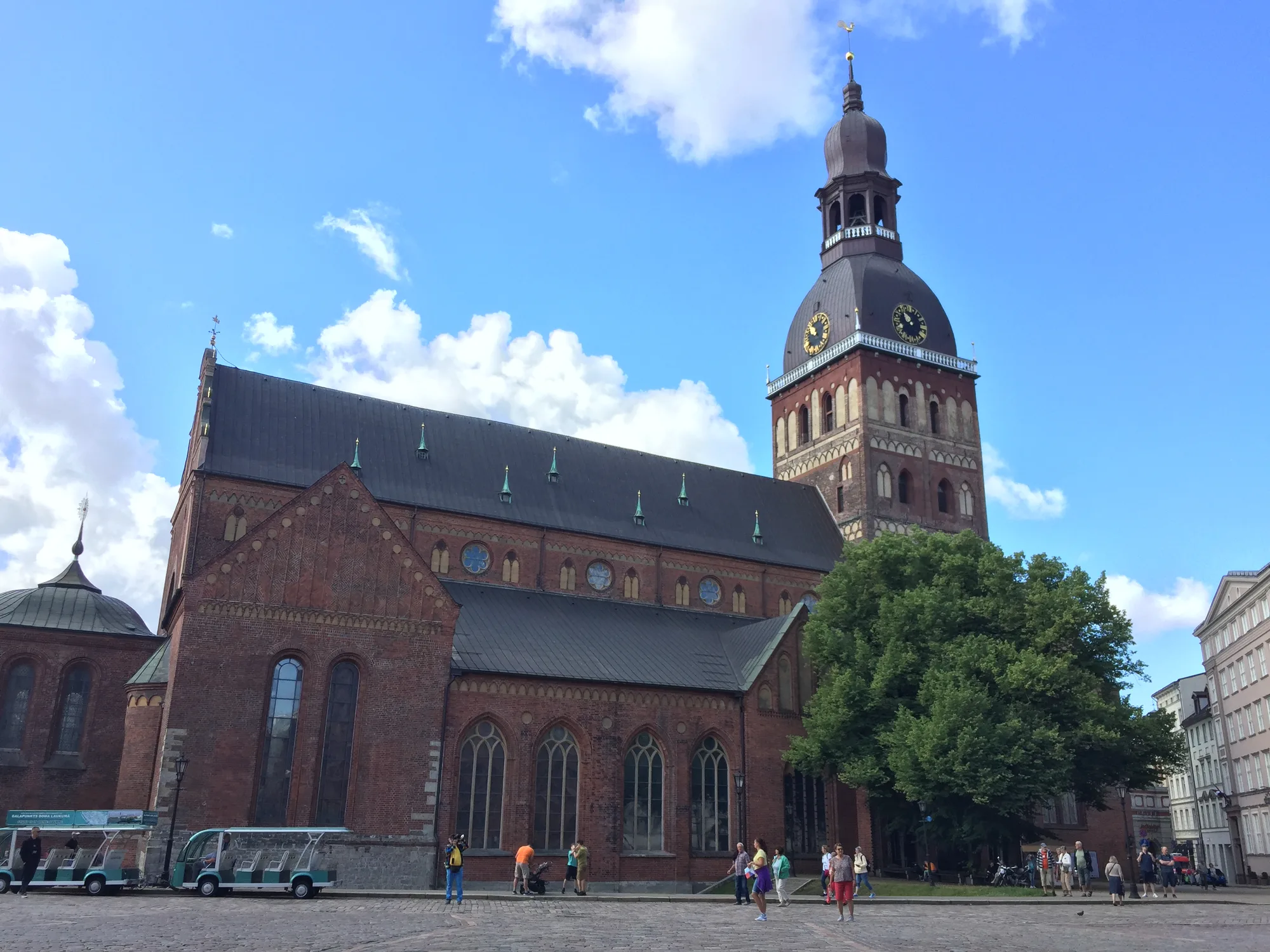
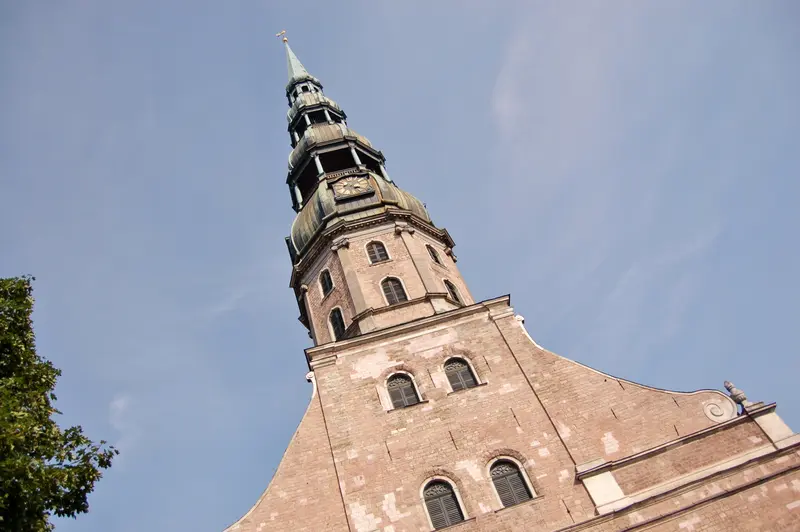
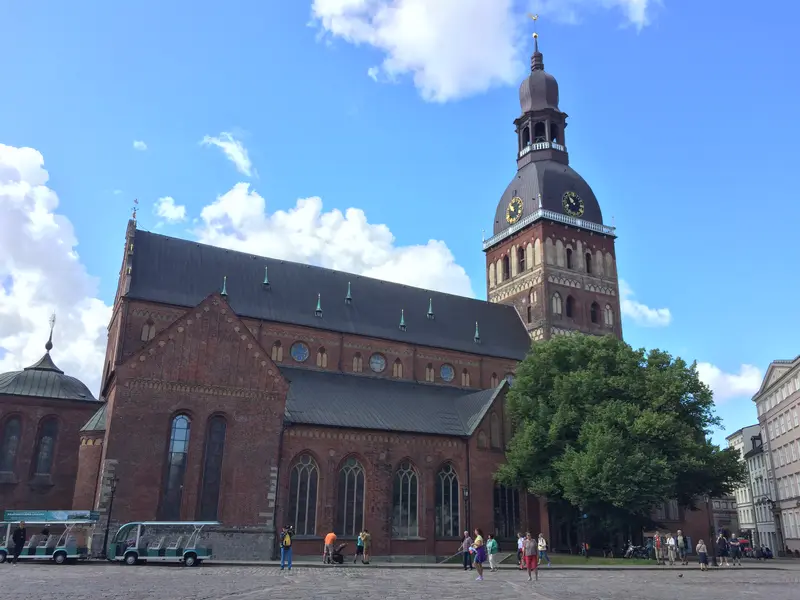
Riga Cathedral (Doms) and St. Peter’s Church anchor the skyline; St. Peter’s offers the easy classic viewpoint over the rooftops if you want to climb just one tower. Tucked into the surviving stretch of town wall is the Swedish Gate, built in 1698 and the only original city gate still standing — a quick, atmospheric detail on any wandering route. Pick one or two of these as anchors rather than chasing all of them.
- House of the Black Heads: 14th-century guild house, rebuilt in the late 1990s.
- The Three Brothers: the city’s oldest dwelling houses.
- Riga Cathedral & St. Peter’s Church: the classic skyline and tower view.
- Swedish Gate (1698): the only surviving original city gate.
Sources
- UNESCO: Historic Centre of Riga ↗
Background for the historic core.
Getting around (and when to go)
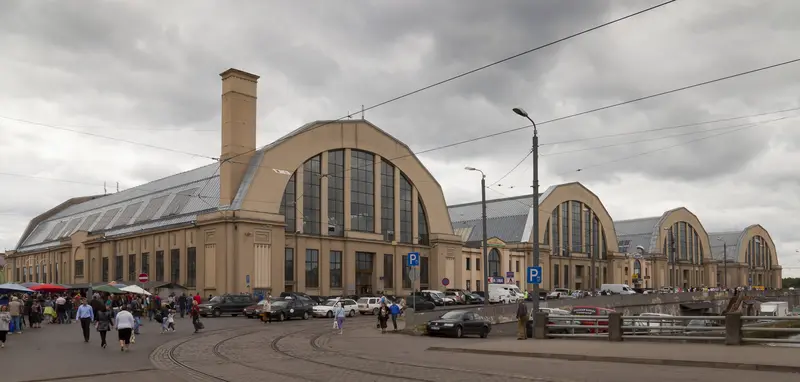
Vecrīga is small and almost entirely pedestrianised, so you explore it on foot — there is no real role for transport inside the walls. It borders the central railway station, the Central Market and the canal parks, all within a few minutes’ walk, and Rīgas Satiksme trams, trolleybuses and buses skirt its edges if you’re heading to or from farther-flung neighbourhoods.
Timing matters more than route here. Go early in the morning for empty, atmospheric lanes and clean photos, or in the early evening for warm light and a livelier mood; the most obvious streets get busy and can feel compressed at midday, especially in summer and on cruise days. A loose loop with one café stop and one viewpoint beats a forced march past every plaque.
- Pedestrianised and compact — walk it; no transport needed inside.
- Edged by the station, Central Market and canal parks (all walkable).
- Best early morning (calm) or early evening (light); avoid the midday crush.
Sources
- Rīgas Satiksme ↗
Official routes if you’re heading farther out.
Who the Old Town is for
Vecrīga is the one Riga district that suits everyone — first-timers, couples, families and history lovers all find their version of it. The trick is matching the visit to your pace: history buffs can layer in churches and the House of the Black Heads, couples can do a slow evening loop with a viewpoint, and anyone short on time can simply wander the lanes for an hour and feel they’ve seen the heart of the city. It is the obvious place to base yourself for a first trip.
- Best for: everyone — it’s the city’s essential first walk.
- History lovers: add churches + the House of the Black Heads.
- Couples: a slow evening loop with one viewpoint.
Is Riga’s Old Town worth visiting?
Absolutely — it is the single most rewarding part of the city and a UNESCO World Heritage Site. Even a short wander through the lanes, with one church or viewpoint and a café stop, gives you the essence of Riga. The only caveat is timing: visit early or late to dodge the midday crowds on the busiest streets, and it stays a delight.
How long do I need for the Old Town?
A half-day covers a satisfying loop: Town Hall Square, the cathedral, the Three Brothers, the Swedish Gate and one tower view, with time for a coffee. Give it a full day if you want to go inside churches or museums, or simply wander without a clock. Either way, build in unstructured time — the Old Town is best when you let yourself get a little lost.
 Location
Riga Central Market
The city’s big market halls — a high-value food stop and a great way to understand everyday Riga fast.
Nearby (walkable)
- Spīķeri
- St. Peter’s Church
- Bremen Town Musicians
- House of the Black Heads
- Latvian Academy of Sciences
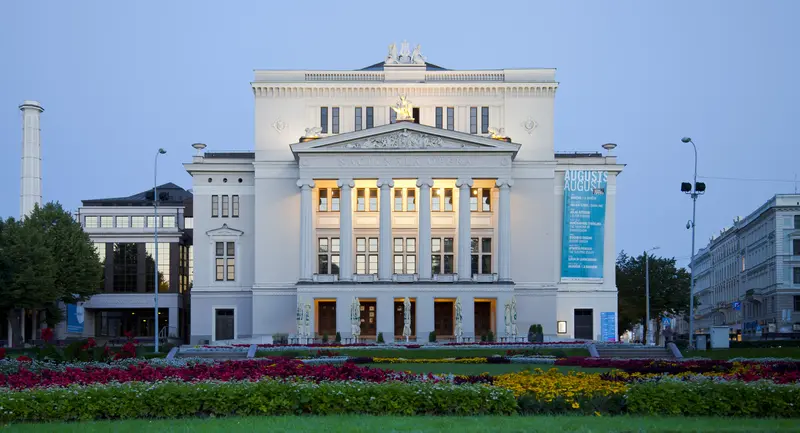
- Latvian National Opera
Map pins
Map data © OpenStreetMap contributors · Tiles © OpenFreeMap
 Location
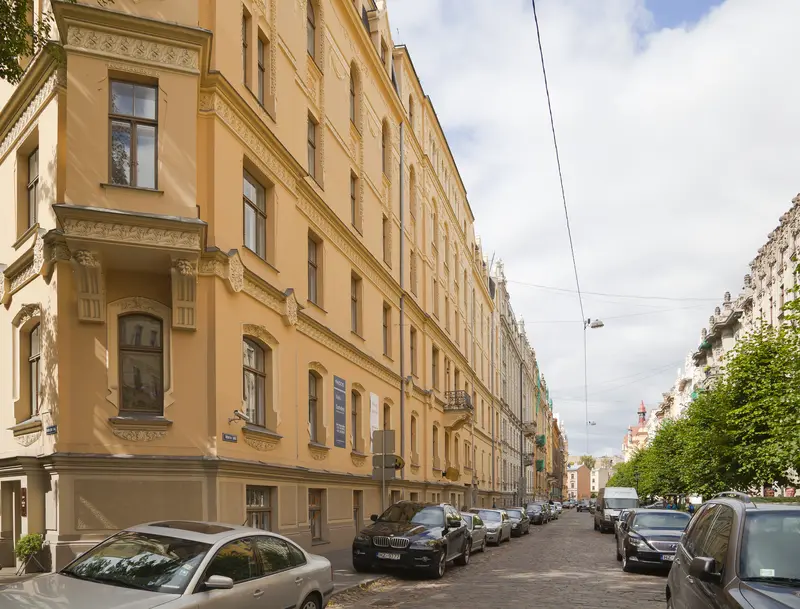
Alberta iela (Art Nouveau)
Riga’s most famous Art Nouveau street — best early for quieter photos and details.
Nearby (walkable)
- Riga Art Nouveau Museum
- Latvian National Museum of Art
- Kronvalda Park
- Esplanāde Park
- Bastejkalna Park
- Freedom Monument
Map pins
Map data © OpenStreetMap contributors · Tiles © OpenFreeMap