 At a glance
- Most costs are manageable if you keep the plan walk-first.
- Cash is useful as convenience — not as a strict requirement.
- Markets and cafés are both a comfort upgrade and a budget win.
 Quick facts
- Cost
- Keep it walk-first: the best experiences (walks, parks, market tasting) are low-cost.
- Best for
- Travelers who want to spend intentionally without overspending.
- Good to know
- Latvia uses the euro (€). Cards are widely accepted in the centre.


The simple Riga money plan
Treat money as a comfort tool. Spend intentionally on one or two things you’ll remember (a special meal, a museum, a viewpoint), and keep the rest high-value and low-stress (walks, parks, market tasting).
- Walk-first trip = fewer transport costs and less planning friction.
- Market tasting = high-value meal without expensive commitment.
- Taxi ‘escape hatch’ = worth it when tired or late.
The currency, and how Riga actually pays
Latvia uses the euro (€) — it joined the eurozone on 1 January 2014, replacing the old lats — so if you've travelled elsewhere in the eurozone you already know the notes and coins. There's no separate currency to change and no exchange-rate guesswork for everyday spending.
Riga is a strongly card-friendly city. Contactless and chip cards are accepted almost everywhere a visitor goes — restaurants, cafés, shops, museums, taxis and rideshare, supermarkets and most transport ticketing. Apple Pay and Google Pay work in the same places contactless cards do. For a normal city trip you can run most of the day card-only and barely touch cash.
- Currency: the euro (€), in use since 2014 — no exchange needed within the eurozone.
- Cards (incl. contactless and phone wallets) are accepted almost everywhere.
- ATMs from major banks are easy to find in the centre if you want cash.
Cash vs card (practical guidance)
Most travelers will be fine with card. The only reason to carry some cash is convenience: small purchases, market stalls, or situations where you don’t want payment friction.
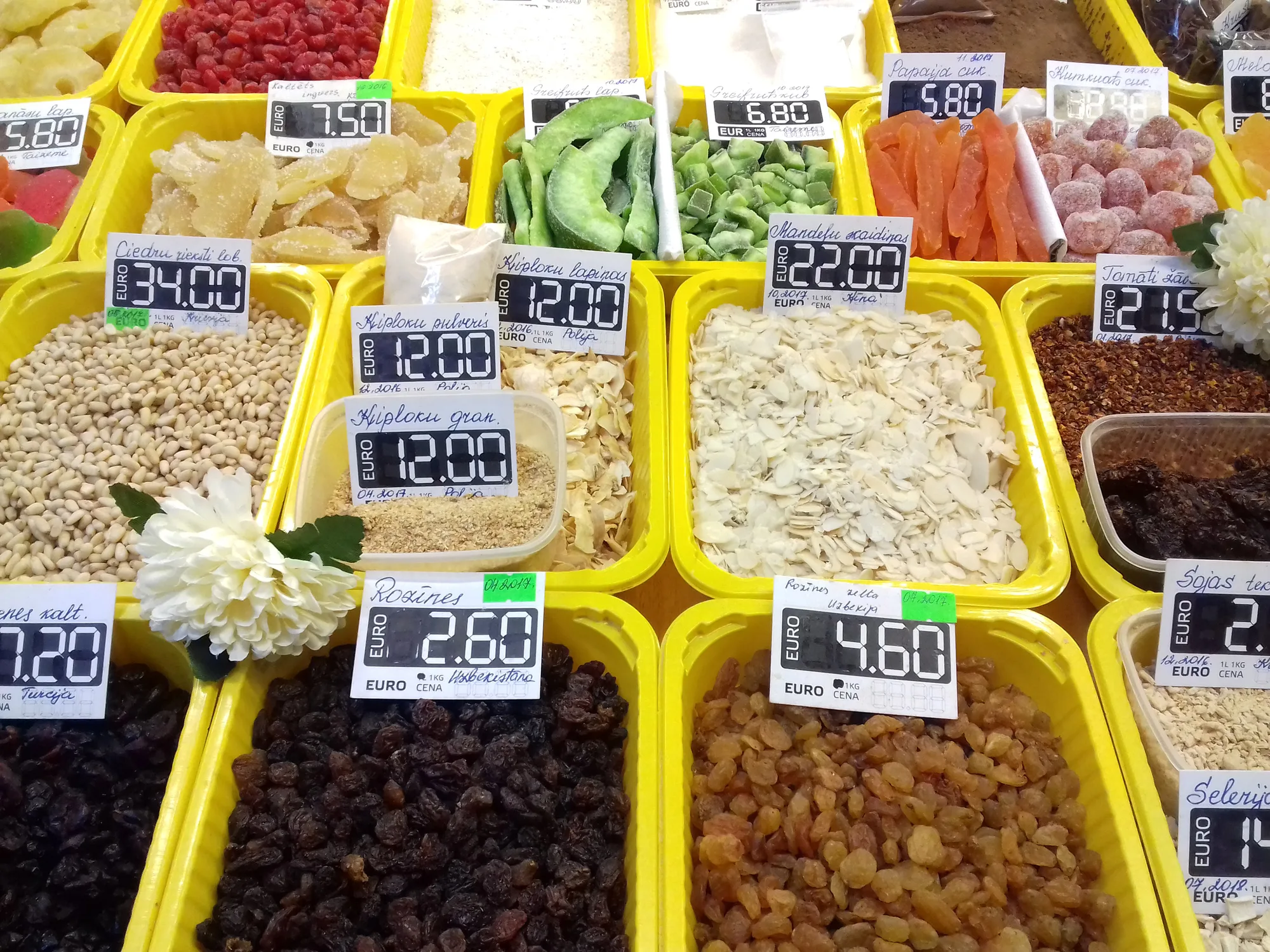
A small amount of cash smooths a handful of moments: individual stalls at the Central Market, tips when a card terminal makes tipping awkward, a public toilet, a tiny kiosk, or the rare small café that prefers it. Twenty or forty euros in small notes covers a typical day's worth of these. If you do want euros, withdraw from a bank-branded ATM rather than the bright standalone 'currency' machines, and decline the machine's offer to 'convert' the charge to your home currency — that dynamic-currency-conversion option almost always gives you a worse rate than letting your own bank do the conversion.
- Keep ~€20–40 in small notes for stalls, tips and the odd cash-only stop.
- Use bank-branded ATMs; be wary of standalone non-bank 'exchange' machines.
- At any ATM or terminal, decline 'pay in your home currency' (DCC) — it costs more.
What a day in Riga roughly costs
Riga is one of the more affordable capitals in the EU, which is part of its appeal — but it isn't 'cheap' the way it was a decade ago, and central tourist spots are priced accordingly. Rather than quoting figures that drift with inflation and season, it helps to think in tiers: the free layer, the everyday layer, and the splurge layer.
The free layer is enormous here and carries most of a good trip: wandering the UNESCO-listed Old Town, the Art Nouveau streets around Alberta iela, the canal park and the riverfront, and simply browsing the Central Market all cost nothing. The everyday layer — a coffee, a casual lunch, a tram ride, a market snack — is gentle on the budget. The splurge layer — a tasting-menu dinner, a guided tour, a taxi across town late at night — is where costs climb, so it pays to choose those moments deliberately.
- Free layer: Old Town, Art Nouveau streets, parks, riverfront, market browsing.
- Everyday layer: coffee, casual meals, market snacks, single transport rides.
- Splurge layer: special dinners, guided tours, late-night taxis — pick a few.
- Riga is affordable but not static, so think in these tiers rather than fixed figures.
Money in Riga FAQ
What currency does Riga use?
The euro (€). Latvia adopted it on 1 January 2014, so the whole country — Riga included — uses standard euro notes and coins. If you're arriving from another eurozone country there's nothing to change; if you're coming from outside it, your bank card will be converted to euros automatically when you pay or withdraw.
Can I use my card everywhere in Riga?
Almost everywhere a traveller goes. Contactless and chip cards, plus Apple Pay and Google Pay, are accepted across restaurants, cafés, shops, museums, supermarkets, taxis and most transport ticketing. The main exceptions are some individual market stalls, very small kiosks, and the occasional tiny café — which is exactly why a little cash on hand is convenient even though you rarely strictly need it.
Should I exchange money before I arrive?
Generally no. Because Riga is card-friendly and uses the euro, the simplest approach is to pay by card and withdraw a small amount of euros from a bank ATM if and when you want cash. That avoids carrying a large sum and tends to give a better rate than pre-trip exchange counters or airport bureaux. Whenever a machine or terminal offers to charge you in your home currency, decline it and let your own bank convert.
How much cash should I carry in Riga?
Less than you might think. Because cards and phone wallets work almost everywhere, a small reserve — roughly €20–40 in small notes per day — comfortably covers the cash-friendly moments: individual market stalls, tips, a public toilet, a small kiosk, or the occasional tiny café. You can always top up from a bank ATM, so there's no need to carry a large float. The one habit worth keeping is to break large notes early (markets and small shops appreciate small change), and to decline any ATM or terminal offer to charge you in your home currency.
Is Riga expensive compared to other European capitals?
By Western and Northern European standards Riga is generally on the affordable side, which is a big part of its appeal — meals, coffee, transport and many attractions tend to cost less than in cities further west. It is no longer the bargain it was a decade or two ago, though, and the most central, tourist-facing spots are priced higher than the local average. The practical upshot is that the free layer of the city (the Old Town, the Art Nouveau streets, the parks and the riverfront) keeps any trip's baseline low, and you control the rest by how often you reach for the splurge layer. Prices move with inflation and season, so treat all of this as direction rather than a fixed quote.
Do I need to tip on top of my bill?
Tipping in Riga is appreciated but not a high-pressure obligation, so it shouldn't be a hidden line item that wrecks a budget. Many visitors leave around 5–10% in restaurants when they're happy with the service, and lighter or nothing for quick coffees. Bills don't usually carry an automatic service charge for individuals, but it's worth a glance at the receipt for larger groups. If you'd like to tip and the card terminal makes it awkward, that small cash reserve covers it.
 Location
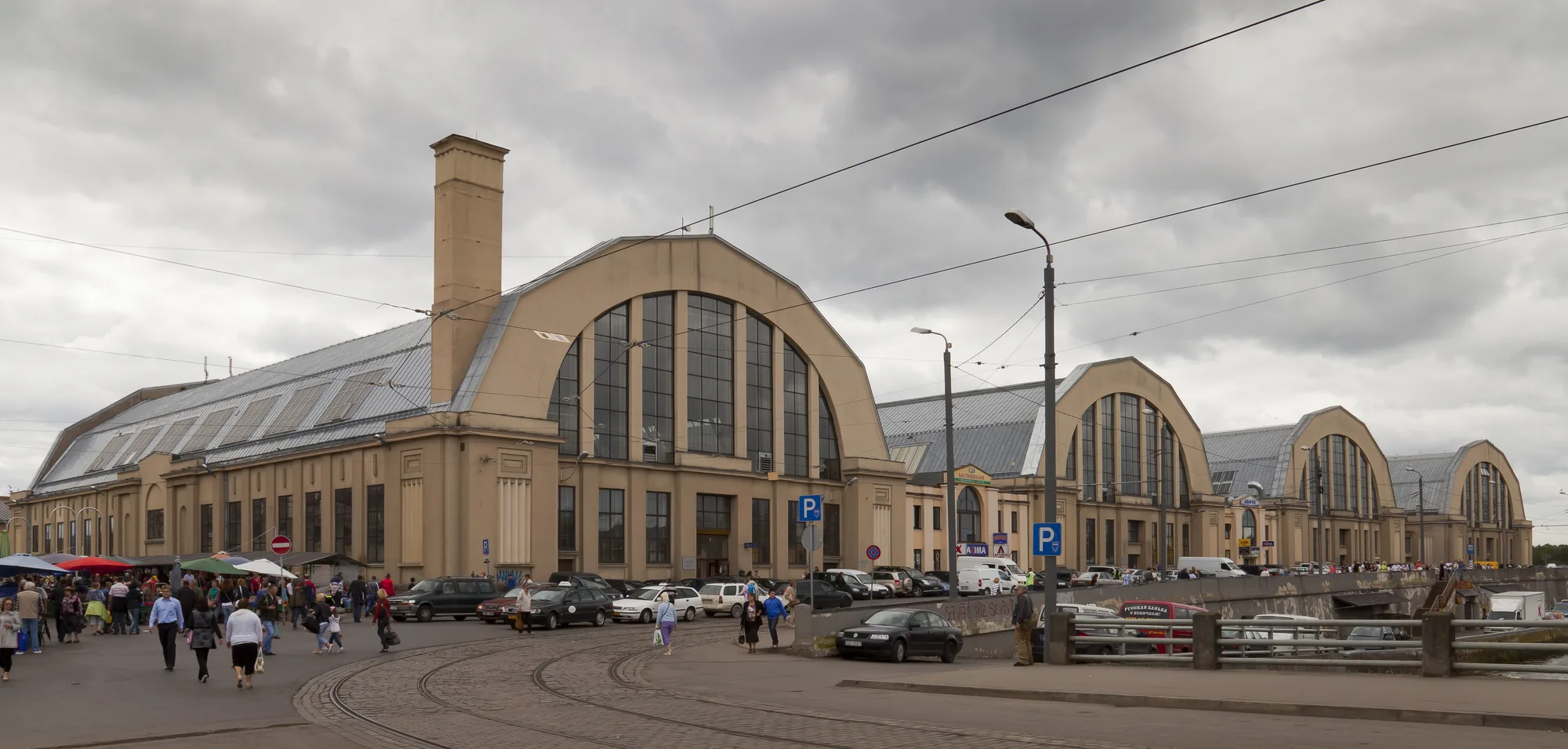
Riga Central Market
The city’s big market halls — a high-value food stop and a great way to understand everyday Riga fast.
Nearby (walkable)
- Spīķeri
- St. Peter’s Church
- Bremen Town Musicians
- House of the Black Heads
- Latvian Academy of Sciences
- Latvian National Opera
Map pins
Map data © OpenStreetMap contributors · Tiles © OpenFreeMap
 Location
Alberta iela (Art Nouveau)
Riga’s most famous Art Nouveau street — best early for quieter photos and details.
Nearby (walkable)
- Riga Art Nouveau Museum
- Latvian National Museum of Art
- Kronvalda Park
- Esplanāde Park
- Bastejkalna Park
- Freedom Monument
Map pins
Map data © OpenStreetMap contributors · Tiles © OpenFreeMap
